


AI Agents vs Agentic AI: What Every AI Enthusiast Should Know in 2026

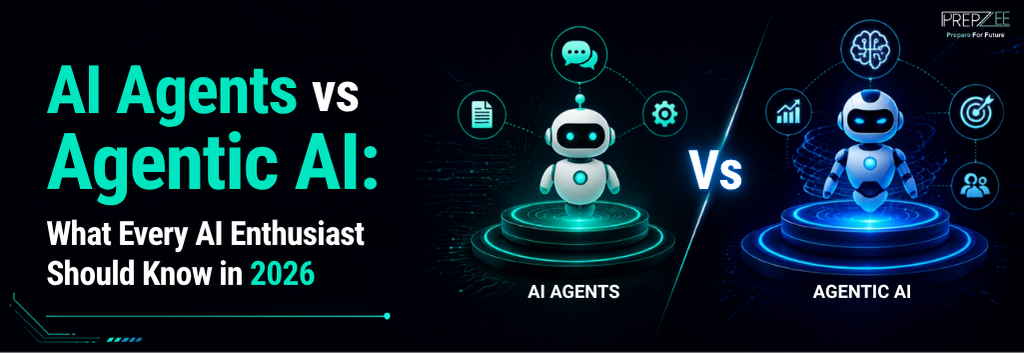
Table of content
- What Are AI Agents?
- What Is Agentic AI?
- AI Agents vs Agentic AI: Understanding the Difference
- Generative AI vs Agentic AI
- Why Agentic AI Is Transforming Industries
- Real-World Examples of Agentic AI
- How LangChain Powers Agentic AI
- Career Opportunities in Agentic AI
- Why Learning Agentic AI Matters
- The Future of Agentic AI
- Ready to Build a Career in AI and Agentic AI?
- Conclusion
- FAQ
Artificial Intelligence is evolving at an incredible pace. Just a few years ago, businesses were excited about chatbots and content generation tools. Today, the conversation has shifted toward AI systems that can plan, reason, make decisions, and complete complex tasks autonomously. This new wave of innovation is powered by AI agents and Agentic AI.
While these terms are often used interchangeably, they are not the same. Understanding the difference between AI agents and Agentic AI is becoming increasingly important for students, professionals, and businesses looking to stay ahead in the AI revolution.
In this guide, we will explore what AI agents are, what Agentic AI means, how they differ, real-world applications, career opportunities, and why learning these technologies can give you a significant competitive advantage.
What Are AI Agents?
An AI agent is an intelligent software system designed to perform specific tasks on behalf of a user. These systems can perceive information, process data, make decisions, and execute actions to achieve a defined objective.
Unlike traditional software that follows fixed instructions, AI agents can adapt their responses based on context and available information.
Examples of AI Agents include:
- Customer support chatbots
- Virtual assistants
- Email categorization systems
- Recommendation engines
- AI-powered research assistants
AI agents combine language models, tools, and decision-making logic to complete specific tasks. Building an agent involves defining its objective, connecting relevant tools, and testing its responses. A practical guide on how to create an AI agent from scratch explains these development steps and the frameworks involved.
For example, when a customer asks a chatbot about an order status, the AI agent retrieves the information and provides an answer. The task is focused and well-defined.
In simple terms, an AI agent acts as a specialist that performs one or a few specific functions efficiently.
What Is Agentic AI?

Agentic AI represents the next evolution of artificial intelligence.
Instead of performing a single task, Agentic AI can coordinate multiple tasks, plan actions, make decisions, utilize various tools, and work toward broader goals with minimal human intervention.
Think of Agentic AI as a manager supervising multiple AI agents.
For example, imagine you ask an AI system:
“Plan my business trip to Dubai.”
A traditional AI chatbot might provide suggestions.
An Agentic AI system could:
- Check your calendar
- Find available flights
- Compare hotel options
- Book transportation
- Schedule meetings
- Send confirmations
- Create an itinerary
All of these actions are completed as part of a larger objective.
This ability to reason, plan, and execute multiple interconnected tasks is what makes Agentic AI revolutionary.
AI Agents vs Agentic AI: Understanding the Difference
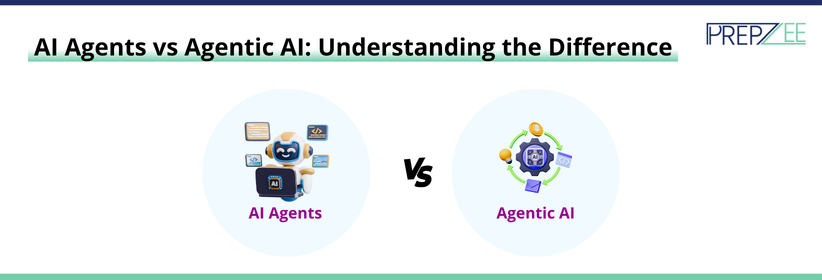
Although both technologies are built on artificial intelligence, their capabilities differ significantly.
AI Agents
AI agents typically:
- Focus on a specific task
- Operate within predefined boundaries
- Execute individual actions
- Require more human guidance
- Solve narrow problems
Agentic AI
Agentic AI systems:
- Handle complex workflows
- Coordinate multiple agents
- Make autonomous decisions
- Adapt dynamically to changing situations
- Pursue broader goals
Simple Example
Imagine ordering a product online.
An AI Agent might:
- Answer questions about the product.
- Track shipment status.
- Process returns.
An Agentic AI system could:
- Research products.
- Compare pricing.
- Negotiate discounts.
- Place the order.
- Track delivery.
- Manage warranty claims.
The difference lies in the level of autonomy and workflow orchestration.
Generative AI vs Agentic AI
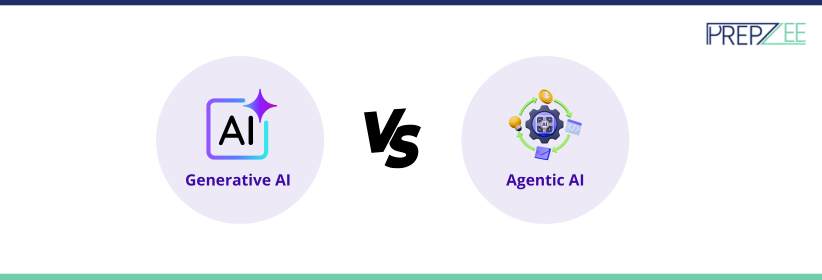
Many people are familiar with Generative AI tools like ChatGPT, Gemini, and Claude. These systems generate text, images, code, and other forms of content.
However, Agentic AI takes things a step further.
Generative AI primarily focuses on producing content, while agentic systems use AI models, tools, and workflows to complete broader tasks. The comparison of Agentic AI vs Generative AI explains their differences in autonomy, applications, and system capabilities.
Generative AI
Generative AI focuses on creating content such as:
- Blog posts
- Images
- Videos
- Code
- Reports
It responds to prompts and produces outputs.
Agentic AI
Agentic AI combines generative capabilities with:
- Planning
- Reasoning
- Memory
- Tool usage
- Decision-making
- Autonomous execution
For example:
Generative AI can write a marketing campaign.
Agentic AI can create the campaign, schedule advertisements, monitor performance, optimize spending, and generate reports automatically.
This distinction is why many industry experts believe Agentic AI will become the foundation of future enterprise automation.
Why Agentic AI Is Transforming Industries
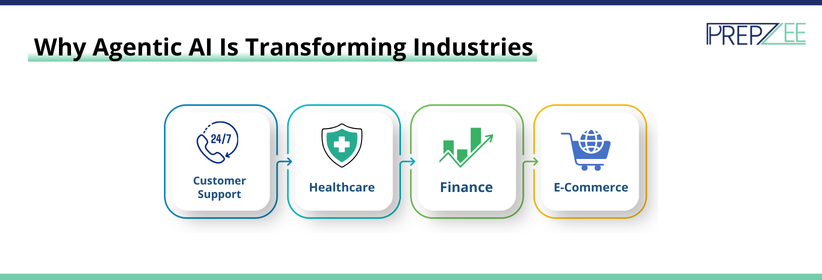
Organizations worldwide are investing heavily in Agentic AI because it can significantly improve productivity and efficiency.
Customer Support
Agentic AI can:
- Understand customer issues
- Retrieve account information
- Escalate complex cases
- Schedule follow-ups
- Monitor resolution status
Healthcare
Healthcare organizations use Agentic AI to:
- Analyze patient records
- Assist in diagnosis
- Schedule appointments
- Recommend treatments
- Monitor patient outcomes
Finance
Financial institutions leverage Agentic AI for:
- Loan processing
- Fraud detection
- Risk assessment
- Compliance monitoring
- Portfolio management
E-Commerce
Online retailers use Agentic AI to:
- Personalize shopping experiences
- Manage inventory
- Predict demand
- Optimize pricing
- Automate customer interactions
These applications demonstrate how Agentic AI extends beyond traditional automation.
Real-World Examples of Agentic AI
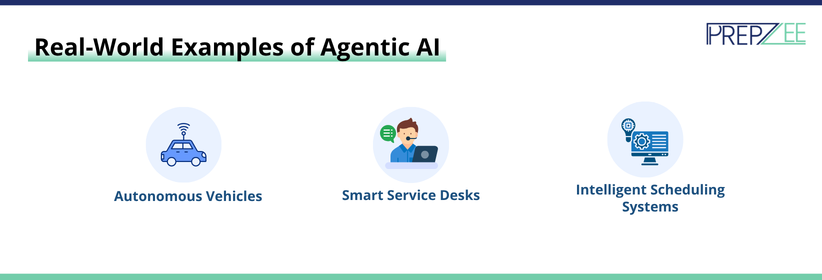
Autonomous Vehicles
Self-driving vehicles continuously gather information from sensors, evaluate conditions, make decisions, and navigate roads safely.
This requires multiple AI agents working together under an agentic framework.
Smart Service Desks
Modern IT support platforms can:
- Detect system issues
- Diagnose problems
- Implement fixes
- Verify resolutions
- Notify users
without requiring human intervention.
Intelligent Scheduling Systems
Advanced scheduling platforms can:
- Analyze calendars
- Coordinate participants
- Resolve conflicts
- Book meeting rooms
- Send reminders
while adapting to changing priorities.
These examples highlight the growing adoption of Agentic AI across industries.
How LangChain Powers Agentic AI
One of the most important technologies enabling Agentic AI is LangChain.
LangChain is a framework that helps developers build AI applications capable of:
- Reasoning
- Tool integration
- Memory management
- Multi-step workflows
- Autonomous decision-making
Building agentic systems involves connecting language models, tools, and multiple execution steps. Frameworks such as LangChain and LangGraph help organize these processes. Understanding AI workflows with LangChain, LangGraph, n8n, and AutoGen provides a practical overview of workflow orchestration and multi-agent collaboration.
Using LangChain, developers can create AI systems that interact with databases, APIs, search engines, and enterprise software.
For example, an AI assistant built with LangChain can:
- Receive a user request.
- Break the task into smaller steps.
- Gather relevant information.
- Make decisions.
- Execute actions.
- Deliver results.
AI agents often require access to external data and applications to execute tasks. The Model Context Protocol (MCP) provides a standardized approach for connecting AI applications with tools and data sources, reducing the need for separate custom integrations.
This makes LangChain one of the most valuable skills for aspiring AI professionals.
Career Opportunities in Agentic AI
The demand for professionals who understand AI agents and Agentic AI is growing rapidly.
Organizations are seeking talent capable of building intelligent systems that automate complex workflows.
Popular career roles include:
- AI Engineer
- Machine Learning Engineer
- Generative AI Developer
- LangChain Developer
- AI Solutions Architect
- AI Product Manager
- Automation Specialist
- Data Scientist
As businesses increasingly adopt Agentic AI, professionals with these skills will enjoy strong career growth opportunities.
Why Learning Agentic AI Matters
Many AI tools today focus solely on generating outputs.
The future, however, belongs to systems that can think, plan, and act independently.
Learning Agentic AI helps individuals:
- Build advanced AI applications
- Understand real-world automation
- Develop problem-solving skills
- Stay competitive in the job market
- Create scalable AI solutions
Whether you are a student, software developer, data scientist, or business professional, understanding Agentic AI can significantly enhance your career prospects.
The Future of Agentic AI
The next generation of artificial intelligence will move beyond simple interactions and become capable of executing entire workflows autonomously.
Future developments may include:
- Fully autonomous business assistants
- Self-managing customer support systems
- Intelligent healthcare coordinators
- Advanced financial advisors
- Enterprise-wide AI automation platforms
As these technologies continue to mature, Agentic AI is expected to become a core component of digital transformation strategies worldwide.
Ready to Build a Career in AI and Agentic AI?
As businesses increasingly adopt AI agents, Agentic AI, and intelligent automation, professionals with practical AI skills are becoming highly sought after. If you’re looking to gain hands-on experience in Generative AI, Machine Learning, LangChain, Prompt Engineering, and Agentic AI workflows, enrolling in an AI ML Certification program can help accelerate your career.
At Prepzee, our industry-focused AI training programs are designed to equip learners with real-world skills that employers value. From understanding AI fundamentals to building advanced AI agents and autonomous workflows, Prepzee helps learners stay ahead in the rapidly evolving AI landscape.
Developing agentic AI applications requires knowledge of large language models, prompt engineering, tool integration, and workflow orchestration. Prepzee’s Generative AI and Machine Learning course covers these technologies through practical projects involving AI agents, LangChain, and multi-agent systems.
Explore our AI ML Certification Program to gain practical experience with the latest AI technologies and prepare for high-demand roles in Artificial Intelligence and Machine Learning.
Conclusion
AI agents and Agentic AI represent two important stages in the evolution of artificial intelligence. While AI agents excel at performing specific tasks efficiently, Agentic AI orchestrates multiple agents, plans actions, makes decisions, and achieves broader objectives autonomously. As organizations continue adopting intelligent automation solutions, platforms like Prepzee are helping learners develop the practical AI and machine learning skills needed to thrive in this rapidly evolving industry.
AI agents excel at performing specific tasks efficiently, while Agentic AI orchestrates multiple agents, plans actions, makes decisions, and achieves broader objectives autonomously.
Understanding this distinction is essential for anyone looking to build a successful career in AI. As organizations continue adopting intelligent automation solutions, expertise in Agentic AI, LangChain, and advanced AI workflows will become increasingly valuable.
The future of AI is not just about generating content—it is about creating intelligent systems capable of thinking, planning, and acting independently. Agentic AI is leading that transformation.
FAQ
FAQ
An AI agent is an intelligent software system that performs specific tasks, makes decisions, and interacts with users or systems to achieve defined objectives.
Agentic AI refers to autonomous AI systems capable of planning, reasoning, coordinating multiple actions, and achieving broader goals with minimal human intervention.
AI agents focus on individual tasks, while Agentic AI manages multiple agents and workflows to accomplish complex objectives autonomously.
They serve different purposes. Generative AI creates content, while Agentic AI can plan, reason, and execute actions. Many modern systems combine both capabilities.
Examples include autonomous vehicles, intelligent scheduling systems, AI-powered service desks, financial automation platforms, and advanced virtual assistants.
LangChain enables developers to build AI systems with memory, reasoning, tool integration, and multi-step workflow capabilities, making it a key technology for Agentic AI applications.
Basic programming knowledge is helpful, but many modern AI learning programs provide beginner-friendly pathways for understanding Agentic AI concepts and tools.
Popular careers include AI Engineer, Machine Learning Engineer, LangChain Developer, AI Solutions Architect, Data Scientist, and AI Product Manager.
Many industry experts believe Agentic AI represents the next major phase of AI evolution because it enables systems to perform complex tasks autonomously and efficiently.
You can begin by learning Generative AI fundamentals, prompt engineering, large language models (LLMs), LangChain, AI workflows, and real-world automation use cases.
Siddharth Sharma