




MLOps Landscape in 2026: Top Tools, Platforms, and Courses

Table of content
- What's New in the MLOps Landscape in 2026
- Understanding the MLOps Landscape
- Quick Comparison: Top MLOps Platforms in 2026
- Key Categories of MLOps Tools and Platforms
- MLOps Roadmap 2026: Where to Start Based on Your Role
- How to Evaluate MLOps Tools and Platforms
- <b>MLOps Certification Course by Prepzee</b>
- MLOps Certification Course
- Popular MLOps Courses and Certifications
- What About LLMOps in 2026?
- Key differences from traditional MLOps:
- Which tools support LLMOps in 2026?
- Conclusion
- FAQ
As machine learning adoption grows, organizations face the challenge of deploying models at scale while maintaining reliability and performance. The MLOps landscape in 2026 has evolved to address these challenges, with a mix of open-source and enterprise-grade platforms that streamline model development, deployment, and monitoring.
This guide provides an overview of the key tools, platforms, and courses shaping MLOps today, helping both professionals and enterprises make informed decisions.
What’s New in the MLOps Landscape in 2026
The MLOps landscape has shifted significantly since 2024. Here is what is different now and why it matters when choosing tools and courses:
LLMOps has become a discipline of its own. As large language models move into production, teams now need dedicated pipelines for fine-tuning, prompt versioning, evaluation, and monitoring of LLM behaviour. Tools like Weights & Biases and Valohai have added LLM-specific features, while new entrants focus exclusively on LLM lifecycle management.
Governance and compliance are no longer optional. Regulatory pressure across the EU (AI Act), finance, and healthcare has made model explainability, audit trails, and bias detection standard requirements – not advanced features. Platforms that lack governance capabilities are being phased out in enterprise evaluations.
The gap between open-source and enterprise platforms has widened. In 2026, open-source tools like Kubeflow and MLflow remain powerful for teams with strong DevOps skills. However, enterprise platforms like Vertex AI, DataRobot, and Domino now offer managed infrastructure that is compelling for teams that cannot afford MLOps engineering overhead.
Real-time model monitoring is now expected. Batch monitoring (checking model performance weekly) is no longer sufficient for production AI. Platforms without real-time drift detection and alerting are losing ground in evaluations.
Cloud-native is the default. Most new MLOps deployments in 2026 begin on cloud infrastructure. On-premise-first strategies are declining except in regulated industries (healthcare, defence, banking). Teams now choose a cloud platform first and then select compatible MLOps tooling.
Understanding these shifts is the first step to choosing the right platform or certification for where the market is headed.
Understanding the MLOps Landscape
The MLOps ecosystem combines multiple technologies and platforms to manage the full lifecycle of machine learning models. Key features include:
- Experiment tracking and model metadata management
- Data labeling, versioning, and preprocessing
- Automated pipeline orchestration and deployment
- Model monitoring, observability, and governance
- Infrastructure management including GPUs, serverless options, and vector databases
By integrating these elements, organizations can scale AI initiatives efficiently and ensure compliance, reproducibility, and collaboration across teams.
Open-Source vs Closed-Source MLOps Tools
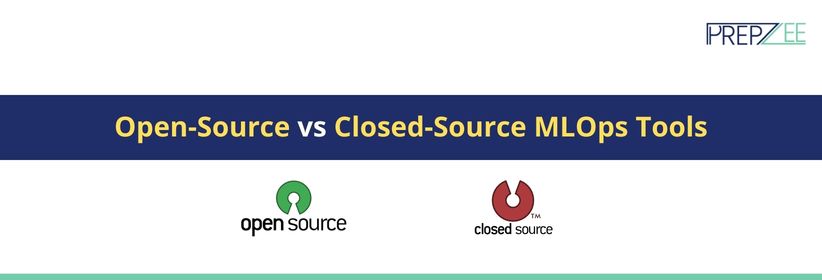
- Open-Source Tools: Flexible, community-driven, and highly customizable. Examples include Kubeflow, MLflow, and Metaflow.
- Closed-Source Platforms: Enterprise-focused with enhanced security, support, and integrations. Examples include DataRobot, Domino, and Modelbit.
The right choice depends on your organization’s tech stack, team expertise, and scaling requirements.
Quick Comparison: Top MLOps Platforms in 2026
| Platform | Type | Best For | Pricing | Open-Source? |
| Google Cloud Vertex AI | End-to-end | Enterprise cloud teams on GCP | Pay-as-you-go | No |
| Databricks | Data + ML platform | Lakehouse + ML at scale | Subscription | Partially |
| Weights & Biases (W&B) | Experiment tracking | Research and ML teams | Free tier + Pro | No |
| Kubeflow | End-to-end pipeline | Kubernetes-native orgs | Free | Yes |
| MLflow | Experiment tracking | Python-centric teams | Free | Yes |
| DataRobot | AutoML + monitoring | Enterprises needing AutoML | Enterprise pricing | No |
| Metaflow | Pipeline management | Data scientists (Netflix-origin) | Free | Yes |
| Domino Data Lab | Enterprise MLOps | Governance-heavy enterprises | Enterprise pricing | No |
| Valohai | Pipeline + cloud | Multi-cloud training workloads | Paid tiers | No |
| TrueFoundry | Kubernetes PaaS | Engineering teams on Kubernetes | Paid tiers | No |
Detailed reviews for each platform are covered in the sections below.
Key Categories of MLOps Tools and Platforms
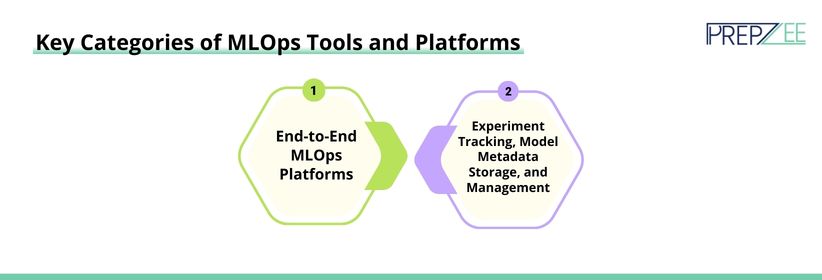
1. End-to-End MLOps Platforms
These platforms provide a unified ecosystem for the complete ML workflow:
- Data management and preprocessing: Handles ingestion, labeling, versioning, and augmentation.
- Experimentation and model development: Supports hyperparameter tuning, visualization, and automated model selection.
- Deployment and serving: Enables containerized deployments, APIs, and scalable serving infrastructure.
- Monitoring and performance tracking: Provides real-time metrics, anomaly detection, and alerting.
- Collaboration and version control: Facilitates teamwork with code, model, and experiment sharing.
- Automated pipelining and workflow orchestration: Manages dependencies, scheduling, and error handling.
- Governance and compliance: Includes explainability, fairness assessment, and privacy safeguards.
- Tool integration: Compatible with popular ML libraries and frameworks.
Popular End-to-End Platforms in 2026:
- Google Cloud Vertex AI: Unified environment for AutoML and custom model training.
- Modelbit: Auto-scaling infrastructure with dataset management and feature store integration.
- Domino Enterprise MLOps: Combines workflow reproducibility, self-service infrastructure, and governance.
- Databricks: Cloud-native data lakehouse platform for analytics and ML.
- DataRobot: Automated deployment, monitoring, and collaborative features.
- Weights & Biases (W&B): Experiment tracking, hyperparameter tuning, and no-code ML apps.
- Valohai: Pipeline management, version control, and cloud resource orchestration.
- TrueFoundry: Kubernetes-based PaaS for scalable model training and deployment.
- Kubeflow: Open-source platform for portable, scalable ML workloads on Kubernetes.
- Metaflow: High-level API for building, managing, and deploying reproducible ML projects.
2. Experiment Tracking, Model Metadata Storage, and Management
These tools enable teams to track experiment parameters, metrics, and visualizations:
- Experiment tracking tools: Track experiments across teams with reproducibility and comparison features.
- Model registry: Version models and maintain lineage for audits and governance.
- ML metadata stores: Store, visualize, and manage metadata efficiently for collaborative projects.
Key considerations when evaluating these tools:
- Pricing, security, and vendor support
- Integration with existing workflows and CI/CD pipelines
- Flexibility in metadata structure and accessibility
- Collaboration features, including reviews and discussions
MLOps Roadmap 2026: Where to Start Based on Your Role
Getting started in MLOps in 2026 requires a different path depending on where you are coming from. Here is a practical roadmap by role:
If you are a Data Scientist moving into MLOps:
- Start with MLflow – Learn experiment tracking and model registry. Free, Python-native, widely used.
- Learn pipeline orchestration – Apache Airflow or Kubeflow Pipelines. Focus on how to automate your existing notebooks.
- Add cloud deployment – AWS SageMaker or Google Vertex AI. Pick the platform your current employer uses.
- Learn model monitoring – Understand drift detection and when to retrigger retraining.
- Get certified – AWS MLOps or Google Cloud Professional ML Engineer to validate your skills.
If you are a DevOps / Platform Engineer moving into MLOps:
- Understand the ML lifecycle – Experiment tracking, model versioning, and serving. Tools: MLflow, BentoML.
- Kubernetes and Kubeflow – Your DevOps foundation maps directly here. Kubeflow is a natural entry point.
- CI/CD for ML pipelines – Adapt your existing GitOps knowledge to trigger model retraining on data changes.
- Model monitoring – Add observability for ML systems: latency, drift, data quality.
- Get certified – AWS MLOps focuses on infrastructure and deployment, aligning well with your background.
If you are building MLOps skills from scratch (fresher / career switcher):
- Python and SQL fundamentals – These are assumed by every MLOps tool and platform.
- Understand ML basics – You do not need to be a data scientist, but you need to understand what a model is, why it retrains, and what can go wrong in production.
- MLflow and experiment tracking – Start here. Free, widely used, and teaches you what MLOps actually solves.
- A structured course – Prepzee’s MLOps certification course covers the full stack with hands-on labs, making it a strong starting point for structured learners.
- Cloud certification – AWS or Google Cloud MLOps certification to make your skills employer-verifiable.
How to Evaluate MLOps Tools and Platforms
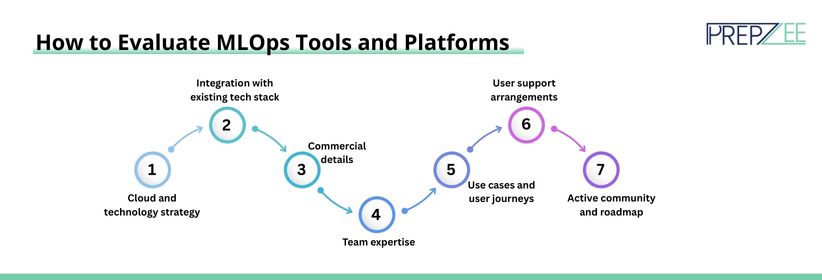
When choosing an MLOps platform, consider these critical factors:
- Cloud and technology strategy: Ensure compatibility with your cloud provider and frameworks.
- Integration with existing tech stack: Must work seamlessly with data engineering platforms, CI/CD, and monitoring systems.
- Commercial details: Pricing models, SLAs, and vendor support are key for scalability.
- Team expertise: Select a tool that matches your team’s programming skills and learning curve.
- Use cases and user journeys: Consider your primary applications, such as NLP, recommender systems, or computer vision.
- User support arrangements: Check documentation, tutorials, community forums, and update frequency.
- Active community and roadmap: A strong user base and clear roadmap ensure longevity and continuous improvement.
MLOps Certification Course by Prepzee
Prepzee’s MLOps certification course is a structured, instructor-led program designed to take professionals from understanding MLOps concepts to implementing production-grade ML pipelines.
What the course covers:
- End-to-end ML pipeline design: from data ingestion to model serving
- Model versioning, experiment tracking, and reproducibility using industry-standard tools
- Automated workflow orchestration and CI/CD integration for ML systems
- Real-world deployment on cloud platforms (AWS and Google Cloud)
- Model monitoring, drift detection, and governance best practices
- Hands-on labs across the full MLOps lifecycle
Format: Live instructor-led sessions with hands-on projects
Level: Intermediate (suitable for data scientists, ML engineers, and DevOps engineers transitioning into MLOps)
Support included: Resume building, interview preparation, and mentor access
Who should enroll:
- Data scientists who want to move their models to production
- ML engineers responsible for pipelines and deployments
- DevOps engineers transitioning into AI operations
- Software engineers working on AI-driven products who need structured MLOps foundations
This course is built around practical implementation, not just theory. Learners work on real projects and leave with deployable pipelines they can showcase in interviews.
MLOps Certification Course
An MLOps certification course helps professionals gain hands-on expertise in deploying, monitoring, and scaling ML models.
Key features of a comprehensive MLOps course:
- End-to-end ML pipeline development
- Model versioning, experimentation, and reproducibility
- Automated workflow orchestration and CI/CD integration
- Real-world deployment on cloud platforms
- Governance, security, and compliance best practices
Who should enroll:
- Data scientists moving models to production
- ML engineers handling pipelines and deployments
- DevOps engineers transitioning to AI operations
- Software engineers working on AI-driven products
At Prepzee, MLOps certification courses combine theory with practical labs to ensure learners can confidently implement MLOps practices in real-world environments.
Popular MLOps Courses and Certifications
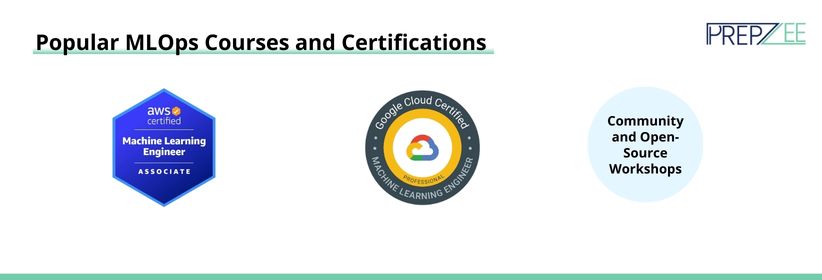
Professionals looking to advance in MLOps can choose from various courses and certifications:
- AWS MLOps Certification: Focused on deploying and managing ML models on AWS infrastructure.
- Google Cloud Professional ML Engineer: Includes scalable ML workflow management and production deployment.
- Community and Open-Source Workshops: Hands-on tutorials for Kubeflow, MLflow, and Neptune.ai.
Factors to consider:
- Prerequisites and experience required
- Hands-on labs and projects
- Vendor focus and tool alignment
- Career and role relevance
What About LLMOps in 2026?
LLMOps – machine learning operations specifically for large language models – has emerged as a distinct specialisation in 2026. While traditional MLOps focuses on structured models and tabular pipelines, LLMOps addresses the unique challenges of deploying and maintaining LLMs in production.
Key differences from traditional MLOps:
Prompt versioning replaces code versioning as a critical workflow
Evaluation frameworks are needed to measure LLM output quality at scale (not just accuracy metrics)
Fine-tuning pipelines for RLHF and instruction tuning requires dedicated infrastructure
Cost management – LLM inference is significantly more expensive than the traditional model serving
Hallucination monitoring is a new category of model observability with no traditional equivalent
Which tools support LLMOps in 2026?
Most of the end-to-end platforms covered in this guide have added LLMOps features. Weights & Biases (W&B) now includes LLM evaluation and prompt tracking. Databricks supports fine-tuning pipelines on its lakehouse infrastructure. Vertex AI on Google Cloud has GenAI Studio and model evaluation tools for LLMs.
If your organisation is deploying LLMs in production, look for platforms that explicitly support prompt management, evaluation logging, and fine-tuning workflows – not just the traditional model monitoring features covered earlier in this guide.
Conclusion
The MLOps landscape in 2026 is rich and diverse, with tools and platforms tailored for enterprise needs, experimentation, deployment, and monitoring. Success depends not only on choosing the right platform but also on having skilled professionals who can operationalize ML at scale.
Investing in an MLOps course or certification ensures professionals are prepared for modern ML operations. At Prepzee, we guide learners through structured paths, helping them build practical expertise, prepare for data engineer certification, and succeed in the rapidly evolving MLOps ecosystem.
FAQ
MLOps (Machine Learning Operations) is the practice of deploying, monitoring, and managing machine learning models in production. It combines software engineering, data science, and DevOps principles to ensure models are reproducible, scalable, reliable, and continuously optimized across the ML lifecycle.
As machine learning powers critical business processes, MLOps ensures models are deployed efficiently, monitored for performance, and updated as data changes. It reduces risks, accelerates innovation, and allows organizations to scale AI while maintaining compliance, reproducibility, and governance.
End-to-end MLOps platforms provide a unified environment for data management, model development, deployment, monitoring, and collaboration. Examples include Databricks, Vertex AI, Modelbit, and Domino, offering features like automated pipelines, version control, hyperparameter tuning, and scalable infrastructure for enterprise-grade ML operations.
Experiment tracking tools like Neptune.ai, MLflow, and Weights & Biases allow teams to log parameters, metrics, and visualizations. They help maintain reproducibility, compare model performance, manage metadata, and facilitate collaboration between data scientists and ML engineers in research and production workflows.
Consider cloud compatibility, integration with existing workflows, commercial pricing, team expertise, primary use cases, vendor support, and community activity. Evaluate automation capabilities, scalability, monitoring features, and governance support to ensure the platform meets both technical and business requirements.
An MLOps certification validates skills in operationalizing ML models, including pipeline automation, deployment, monitoring, and governance. It demonstrates practical expertise in taking models from development to production, ensuring reliability, reproducibility, and scalability in enterprise or cloud-based environments.
For professionals in India, the AWS Certified MLOps Engineer and Google Cloud Professional ML Engineer are the two most employer-recognised credentials in 2026. Both appear frequently in Indian job postings at product companies, IT services firms, and global enterprises. Prepzee’s MLOps certification course is a strong preparatory option as it combines structured instruction with hands-on projects and interview preparation specifically designed for the Indian job market.
MLOps covers the full lifecycle of machine learning models – including training, deployment, monitoring, and retraining. LLMOps is a specialisation focused on large language models, which introduces additional challenges around prompt versioning, fine-tuning pipelines, evaluation of generated text, and cost management for inference. In 2026, most enterprise teams need both: MLOps for their existing ML workloads and LLMOps practices for any generative AI initiatives.
Core MLOps skills in 2026 include: Python programming, containerisation (Docker and Kubernetes), CI/CD pipelines (GitHub Actions or GitLab CI), cloud platforms (AWS, GCP, or Azure), experiment tracking tools (MLflow or Weights & Biases), and model monitoring. Strong candidates also understand data pipeline orchestration (Airflow) and have experience deploying at least one model end-to-end in a cloud environment.
Yes. MLOps engineering is one of the fastest-growing roles in the AI space. As organisations scale their AI initiatives, the demand for professionals who can operationalise ML models – not just build them – has grown significantly. MLOps engineers typically earn more than data scientists at equivalent experience levels, and the role sits at the intersection of ML and software engineering, making it highly durable as a career investment.
The best machine learning platform for building and deploying models at scale in 2026 depends on your organization’s requirements. Popular choices include Azure Machine Learning, AWS SageMaker, Google Vertex AI, Databricks, and Dataiku. These platforms provide end-to-end capabilities for model development, deployment, monitoring, and governance, making them ideal for enterprises looking to operationalize AI at scale.
Some of the best MLOps platforms in 2026 include Azure Machine Learning, AWS SageMaker, Google Vertex AI, Databricks, MLflow, Kubeflow, and Dataiku. These platforms help data science teams automate model training, deployment, monitoring, and lifecycle management while improving collaboration and scalability across machine learning projects.
Leading tools for MLOps and model governance include MLflow, Kubeflow, Azure Machine Learning, AWS SageMaker, Google Vertex AI, Databricks, and Dataiku. These tools provide features such as experiment tracking, model versioning, monitoring, explainability, compliance, and governance to ensure machine learning models remain reliable, secure, and production-ready.


