





Top 15 MLOps Tools to Learn in 2026

Table of content
- Introduction
- What is MLOps?
- Why Learning MLOps Tools is Important in 2026
- Top 15 MLOps Tools for 2026
- How to Choose the Right MLOps Tools
- Role of AWS and Databricks in MLOps
- Career Opportunities After Learning MLOps Tools
- Skills You Need to Master MLOps
- Why Choose Prepzee for MLOps Training
- Final Thoughts
- FAQ
Introduction
Machine Learning Operations (MLOps) has become a critical discipline in the AI and machine learning course curriculum for modern data engineers and ML engineers. As organizations increasingly deploy machine learning models in production, the need for robust MLOps tools has never been greater. Whether you’re pursuing an MLOps certification or looking to enhance your data engineer certification, understanding the top MLOps tools available in 2026 is essential.
At Prepzee, we believe that mastering these tools is fundamental to becoming a proficient MLOps professional. This guide covers the essential MLOps tools that every practitioner should know, from AWS MLOps solutions to Databricks MLOps platforms, ensuring you have the knowledge to excel in your MLOps course or certification program.
What is MLOps?

MLOps (Machine Learning Operations) is a set of practices that combines machine learning, DevOps, and data engineering to streamline the lifecycle of ML models—from development to deployment and monitoring.
It focuses on:
- Automating ML workflows
- Versioning datasets and models
- Continuous integration and deployment (CI/CD) for ML
- Monitoring model performance
With the rise of AI and machine learning courses, MLOps has become a must-have skill for data professionals.
Why Learning MLOps Tools is Important in 2026

The ML ecosystem is evolving rapidly, and companies are investing heavily in:
- Scalable AI systems
- Real-time data pipelines
- Cloud-native ML platforms
Professionals skilled in aws mlops, databricks mlops, and advanced MLOps tools are in high demand. Whether you’re targeting a role in ML engineering or pursuing a data engineer certification, mastering these tools will give you a competitive edge.
Top 15 MLOps Tools for 2026
1. Kubernetes (K8s)
Kubernetes continues to be the backbone of modern MLOps infrastructure in 2026. If you’re planning to build scalable machine learning systems, this is one tool you simply can’t ignore.
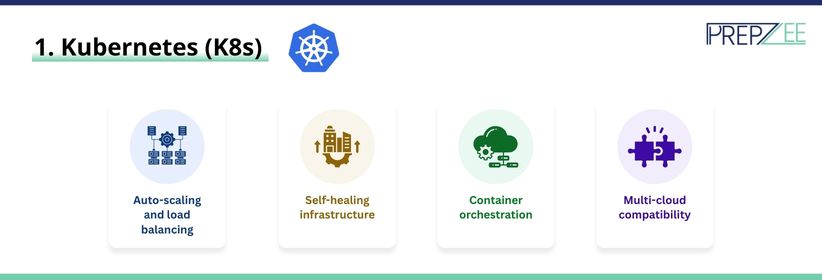
It helps teams deploy, manage, and scale ML models efficiently using container orchestration. Features like auto-scaling, load balancing, and self-healing make it ideal for production environments.
Whether you’re enrolled in an mlops course or working on real-world aws mlops projects, Kubernetes plays a critical role especially in cloud-native and databricks mlops setups.
Key Features:
- Auto-scaling and load balancing
- Self-healing infrastructure
- Container orchestration
- Multi-cloud compatibility
2. MLflow
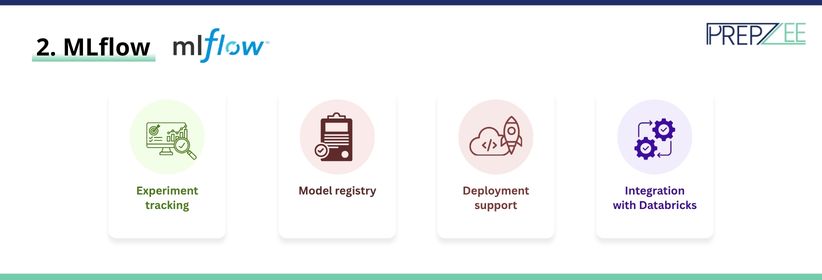
MLflow, developed by Databricks, has become a go-to platform for managing the ML lifecycle. It’s widely used for tracking experiments and organizing models in one place.
If you’re pursuing an mlops certification, chances are MLflow will be a core part of your learning path. It simplifies workflows and integrates smoothly with databricks mlops, making it highly practical for enterprise use.
Key Features:
- Experiment tracking
- Model registry
- Deployment support
- Integration with Databricks
3. Apache Airflow
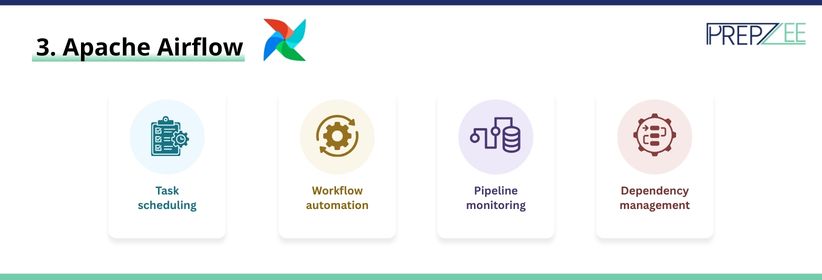
Apache Airflow is a powerful tool for managing complex ML workflows. It allows you to schedule, monitor, and automate pipelines using DAGs (Directed Acyclic Graphs).
It’s commonly included in any serious mlops course or data engineer certification because of its ability to handle dependencies and workflow automation at scale.
Airflow also integrates well with aws mlops services, making it highly flexible across cloud environments.
Key Features:
- Task scheduling
- Workflow automation
- Pipeline monitoring
- Dependency management
4. AWS SageMaker
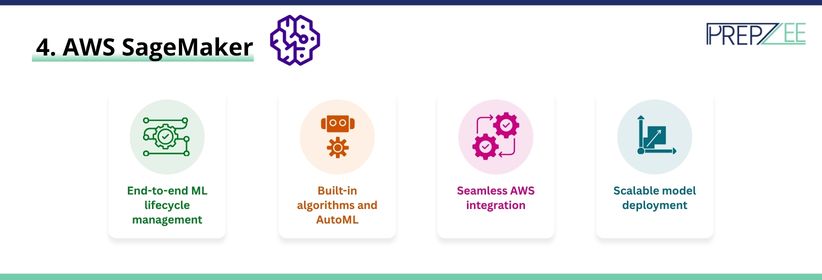
For anyone working within the AWS ecosystem, SageMaker is a must-learn tool. It covers everything from data preparation to model deployment in one platform.
Professionals focusing on aws mlops rely heavily on SageMaker to build scalable and production-ready ML systems. It’s also a key component in most cloud-focused mlops certification programs.
Key Features:
- End-to-end ML lifecycle management
- Built-in algorithms and AutoML
- Seamless AWS integration
- Scalable model deployment
5. Databricks
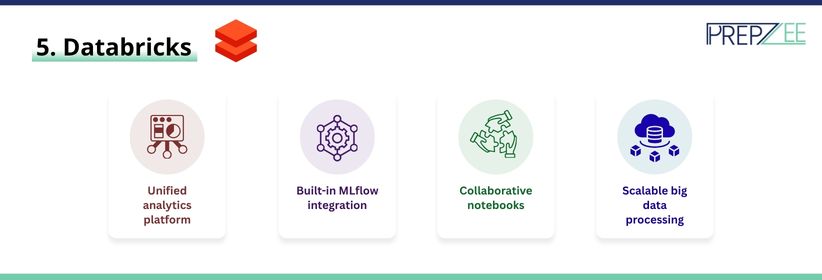
Databricks has become a preferred platform for organizations working with large-scale data and machine learning. It combines data engineering, analytics, and ML into a single unified environment.
With strong support for collaboration and built-in MLflow integration, databricks mlops is now widely adopted across enterprises. It’s also becoming increasingly important for those pursuing a data engineer certification.
Key Features:
- Unified analytics platform
- Built-in MLflow integration
- Collaborative notebooks
- Scalable big data processing
6. Jenkins
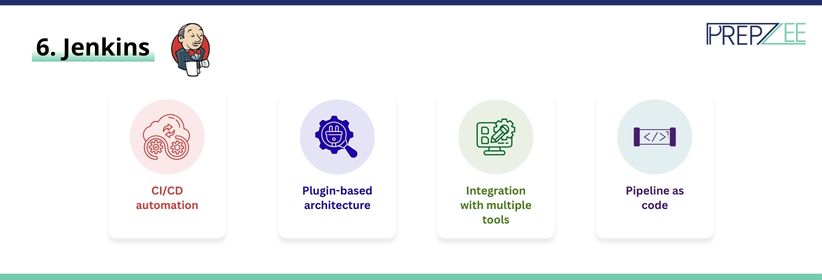
Jenkins continues to be a reliable choice for CI/CD in MLOps pipelines. It helps automate the building, testing, and deployment of ML models.
Its flexibility and integration capabilities make it suitable for both aws mlops and hybrid environments. That’s why it remains a core topic in many mlops courses.
Key Features:
- CI/CD automation
- Plugin-based architecture
- Integration with multiple tools
- Pipeline as code
7. Docker
Docker is fundamental for containerizing machine learning applications. It ensures that your models run consistently across different environments—whether local, staging, or production.
If you’re serious about MLOps, Docker is non-negotiable. It’s a core skill taught in every mlops course and essential for anyone aiming for a data engineer certification.
Key Features:
- Containerization
- Environment consistency
- Easy deployment
- Lightweight virtualization
8. Kubeflow
Kubeflow extends Kubernetes capabilities specifically for machine learning workflows. It’s designed to simplify the deployment and management of ML pipelines on Kubernetes.
From experiment tracking to model serving, Kubeflow covers everything needed for production ML systems. It’s especially useful for teams already working with Kubernetes-based infrastructure.
Key Features
- ML pipeline orchestration
- Hyperparameter tuning
- Model serving
- Kubernetes-native architecture
9. GitLab CI/CD
GitLab offers built-in CI/CD capabilities along with version control, making it a convenient tool for managing ML projects.
It allows teams to automate testing and deployment directly from repositories, streamlining the entire MLOps workflow. Many organizations include GitLab in their mlops tool stack for better efficiency.
Key Features:
- Integrated CI/CD pipelines
- Version control system
- Automated testing
- DevOps lifecycle management
10. Prometheus & Grafana
Monitoring is a crucial part of any MLOps setup, and that’s where Prometheus and Grafana come in.
Prometheus collects metrics from your systems, while Grafana helps visualize and analyze that data. Together, they provide deep insights into model performance and system health—something every production ML system needs.
Key Features:
- Real-time monitoring
- Metrics collection
- Data visualization dashboards
- Alerting system
11. Weights & Biases
Weights & Biases (W&B) is a popular tool for experiment tracking and collaboration. It allows teams to monitor experiments, compare results, and manage models efficiently.
It’s becoming a standard inclusion in modern ai and machine learning course programs due to its simplicity and powerful features.
Key Features:
- Experiment tracking
- Collaboration tools
- Performance visualization
- Hyperparameter tracking
12. TensorFlow Extended (TFX)
TFX is Google’s production-ready platform for building end-to-end ML pipelines. It handles everything from data validation to model deployment.
If you’re working with TensorFlow, TFX is a great tool to learn as part of your mlops certification journey.
Key Features:
- Pipeline orchestration
- Model validation
- Scalable deployment
- End-to-end ML workflow
13. Feature Store (Tecton)
Feature stores like Tecton are gaining popularity as ML systems become more complex. They help manage and serve features consistently across training and production environments.
For advanced MLOps implementations, feature stores are becoming essential—especially in large-scale enterprise systems.
Key Features:
- Feature management
- Real-time feature serving
- Consistency between training & production
- Data pipeline integration
14. Apache Spark & PySpark
Apache Spark is widely used for processing large datasets, and PySpark makes it accessible for Python developers.
These tools are foundational for big data workflows and are heavily used in databricks mlops environments. They are also key components of any data engineer certification.
Key Features:
- Distributed data processing
- Big data analytics
- Python integration (PySpark)
- High scalability
15. DVC (Data Version Control)
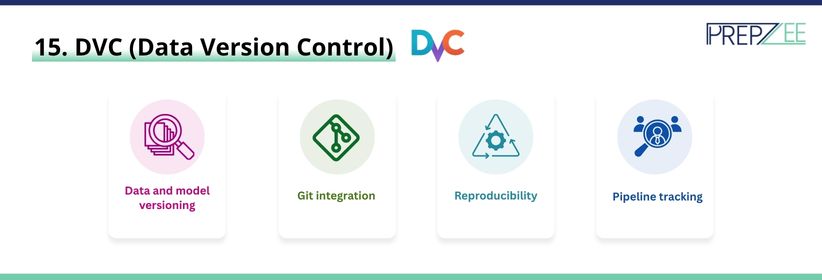
DVC helps track changes in datasets and ML models, making experiments reproducible and manageable.
It integrates with Git and allows teams to maintain version control over data and models—something that’s critical for any mature MLOps setup.
Key Features:
- Data and model versioning
- Git integration
- Reproducibility
- Pipeline tracking
How to Choose the Right MLOps Tools
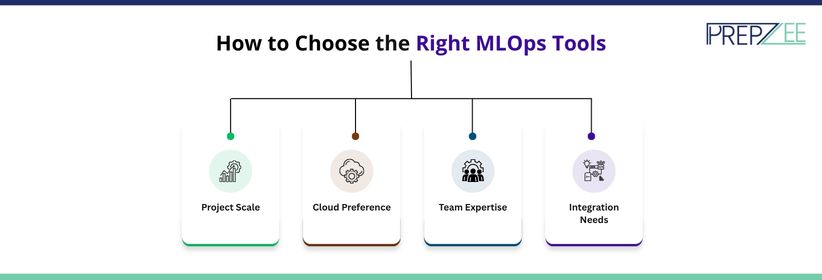
Selecting the right mlops tool depends on:
- Project Scale: Small vs enterprise-level systems
- Cloud Preference: AWS, Azure, or GCP
- Team Expertise: DevOps vs data science focus
- Integration Needs: Compatibility with existing tools
A well-structured mlops course can help you understand how to combine these tools effectively.
Role of AWS and Databricks in MLOps
AWS MLOps
AWS provides a comprehensive ecosystem for ML operations, including:
- SageMaker
- Lambda
- S3
- CodePipeline
Professionals skilled in aws mlops are highly valued for building scalable AI solutions. Beyond just tools, AWS enables end-to-end automation of the ML lifecycle from data ingestion and model training to deployment and monitoring. Its tight integration across services helps teams build reliable, production-ready pipelines with minimal manual effort. This makes AWS a preferred choice for organizations looking to scale machine learning efficiently while maintaining performance and security.
Databricks MLOps
Databricks simplifies ML workflows with:
- Built-in MLflow
- Collaborative environment
- Scalable data processing
Learning databricks mlops is especially useful for big data and enterprise AI projects.
Career Opportunities After Learning MLOps Tools
Mastering MLOps tools opens doors to high-demand roles such as:
- ML Engineer
- MLOps Engineer
- Data Engineer
- AI Engineer
- Cloud ML Architect
Professionals with an mlops certification or data engineer certification are particularly sought after.
Skills You Need to Master MLOps
To succeed in MLOps, focus on:
- Python & SQL
- Machine Learning fundamentals
- Cloud platforms (AWS, Azure, GCP)
- CI/CD pipelines
- Docker & Kubernetes
- Data engineering concepts
Enrolling in an ai and machine learning course can help build a strong foundation.
Why Choose Prepzee for MLOps Training
At Prepzee, we focus on practical, industry-aligned learning that prepares you for real-world challenges.
Our programs are designed to:
- Provide hands-on experience with top mlops tools
- Help you earn a recognized mlops certification
- Build expertise in aws mlops and databricks mlops
- Prepare you for high-paying AI and data roles
Final Thoughts
MLOps is rapidly becoming a core component of modern AI systems. As businesses scale their ML capabilities, the demand for professionals skilled in MLOps tools continues to grow.
By learning the top MLOps tools in 2026 and enrolling in a structured mlops course, you can position yourself at the forefront of AI innovation.
Whether you’re aiming for a career in data engineering, AI, or cloud computing, mastering MLOps is a smart investment for the future.
FAQ
MLOps is a practice that combines machine learning, DevOps, and data engineering to automate and manage the ML lifecycle. It ensures faster deployment, scalability, and reliability of ML models.
It also helps standardize workflows, improve collaboration between teams, and reduce manual errors in model deployment. As organizations scale AI initiatives, MLOps becomes essential for maintaining performance, monitoring models, and ensuring continuous improvement in production environments.
Some of the top tools include MLflow, Kubeflow, AWS SageMaker, Databricks, Docker, Kubernetes, and Apache Airflow.
In addition, tools like DVC, Prometheus, and Weights & Biases are gaining popularity for experiment tracking and monitoring. The right toolset often depends on your project requirements, cloud platform, and team structure, which is why most mlops courses focus on a combination of these tools.
Yes, basic knowledge of Python and SQL is important for working with MLOps tools and building ML pipelines.
Apart from coding, understanding APIs, scripting, and automation concepts will also be helpful. Familiarity with cloud platforms and tools like Docker or Kubernetes can significantly improve your ability to work on real-world MLOps projects.
DevOps focuses on software development and deployment, while MLOps specifically deals with machine learning model lifecycle management.
MLOps also includes additional challenges like data versioning, model monitoring, and retraining, which are not typically part of DevOps. This makes MLOps more complex, as it requires handling both data and model performance in dynamic environments
Yes, aws mlops is widely used in the industry due to its scalability, flexibility, and comprehensive ML services.
Services like SageMaker, S3, and Lambda make it easier to build, deploy, and monitor ML models at scale. Many organizations prefer AWS because it offers end-to-end support for machine learning workflows and integrates seamlessly with other cloud services.
Start by learning ML fundamentals, then enroll in an mlops course, gain hands-on experience with tools, and pursue an mlops certification.
Building real-world projects, contributing to open-source, and understanding cloud platforms can give you an added advantage. A strong foundation in both data engineering and DevOps concepts will help you stand out in this field.
Databricks mlops helps streamline ML workflows with integrated tools like MLflow and supports large-scale data processing.
It enables collaboration between data engineers and data scientists, making it easier to manage the entire ML lifecycle. Its ability to handle big data and provide unified analytics makes it a preferred choice for enterprise-level MLOps implementations.
Yes, companies across industries are actively hiring MLOps professionals to manage and scale AI systems.
With the rapid adoption of AI, there is a growing need for experts who can operationalize machine learning models. Roles like MLOps Engineer, ML Engineer, and AI Engineer are among the fastest-growing job profiles in tech.
Popular options include mlops certification, data engineer certification, and ai and machine learning course certifications.
Cloud certifications from AWS, Azure, and Google Cloud also add significant value. These certifications validate your skills and improve your chances of landing high-paying roles in AI and data-driven organizations.
With consistent learning, you can gain foundational MLOps skills in 3–6 months through structured training programs.
However, mastering advanced tools and real-world implementation may take longer depending on your background. Hands-on practice, project work, and continuous learning are key to becoming proficient in MLOps.


