




 Blog DP-750 Azure Databricks Data Engineer Associate Exam Guide: Complete Study Plan & Preparation Tips
 DP-750 Azure Databricks Data Engineer Associate Exam Guide: Complete Study Plan & Preparation Tips

Table of content
The DP-750 Azure Databricks Data Engineer Associate certification is one of Microsoft’s latest role-based certifications for professionals working with modern data engineering workloads. It validates your ability to configure Azure Databricks environments, govern data using Unity Catalog, process large datasets, and deploy production-grade pipelines.
As organizations continue adopting lakehouse architectures and real-time analytics platforms, Databricks skills are becoming increasingly valuable. Unlike traditional Azure certifications, DP-750 focuses heavily on practical data engineering concepts and real-world implementations.
At Prepzee, we regularly see growing interest among data professionals looking to strengthen their Databricks and Azure expertise. If you’re planning to take the exam, having a structured study plan and hands-on experience can significantly improve your chances of success. This guide covers the exam objectives, study roadmap, resources, and practical tips to help you prepare effectively.
What Is the DP-750 Certification?
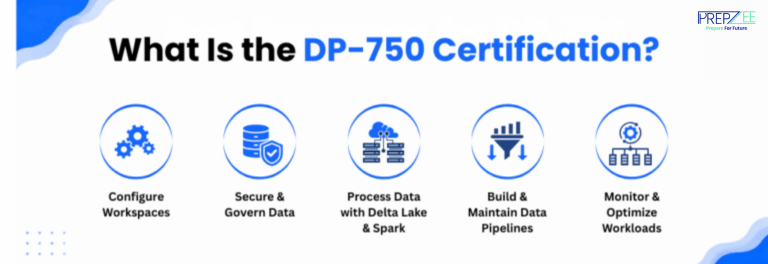
DP-750: Azure Databricks Data Engineer Associate is designed for professionals who build and manage data engineering solutions using Azure Databricks.
The certification validates your ability to:
- Configure Databricks workspaces and compute resources.
- Secure and govern data assets using Unity Catalog.
- Process data using Delta Lake and Apache Spark.
- Build and maintain data pipelines.
- Monitor and optimize workloads.
The exam is ideal for data engineers, analytics engineers, and professionals working with modern lakehouse architectures.
DP-750 Exam Domains and Weightage
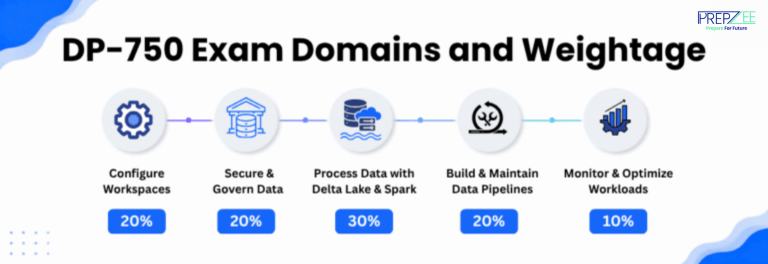
Microsoft divides the exam into four major domains.
| Exam Domain | Weightage | Key Topics |
| Configure Azure Databricks Environment | 15–20% | Clusters, Compute, SQL Warehouses, Photon, Runtime Versions |
| Secure and Govern Data with Unity Catalog | 15–20% | Catalogs, Schemas, Permissions, Data Lineage, Delta Sharing |
| Prepare and Process Data | 30–35% | Delta Lake, Auto Loader, Spark SQL, DataFrames, Data Quality |
| Deploy and Maintain Data Pipelines | 30–35% | Lakeflow Jobs, Git Integration, Monitoring, CI/CD, Optimization |
Configure Azure Databricks Environment
This section focuses on workspace setup and compute management. Candidates are expected to understand clusters, serverless SQL warehouses, Photon acceleration, runtime versions, and performance configurations.
Secure and Govern Data with Unity Catalog
Topics include:
- Catalogs and schemas
- Permissions and access controls
- Row-level and column-level security
- Data lineage
- Delta Sharing
- Governance best practices
Understanding how Unity Catalog works is important because governance questions form a key part of the exam.
Prepare and Process Data
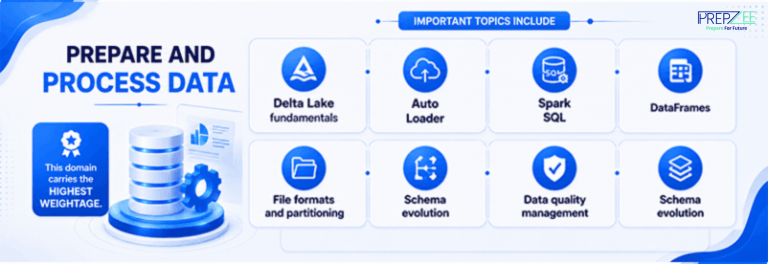
This domain carries the highest weightage.
Important topics include:
- Delta Lake fundamentals
- Auto Loader
- Spark SQL
- DataFrames
- File formats and partitioning
- Schema evolution
- Data quality management
Practical exposure to PySpark and SQL transformations can be particularly useful.
Deploy and Maintain Data Pipelines
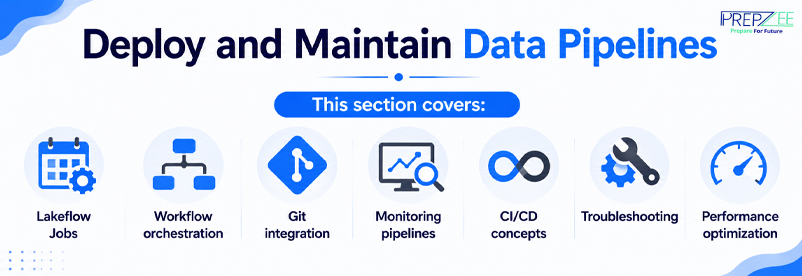
This section covers:
- Lakeflow Jobs
- Workflow orchestration
- Git integration
- Monitoring pipelines
- CI/CD concepts
- Troubleshooting
- Performance optimization
Understanding how production workloads are managed helps answer scenario-based questions.
6-Week DP-750 Study Plan
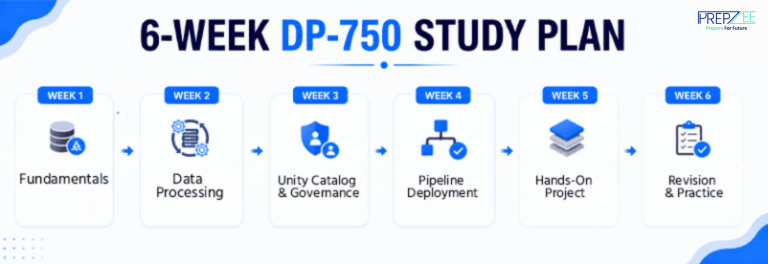
| Week | Focus Area | Topics to Cover |
| Week 1 | Databricks Fundamentals | Architecture, Clusters, Delta Lake Basics |
| Week 2 | Data Processing | PySpark, DataFrames, Spark SQL, Auto Loader |
| Week 3 | Unity Catalog & Governance | Permissions, Lineage, Delta Sharing |
| Week 4 | Pipeline Deployment | Jobs, Workflows, Git Integration |
| Week 5 | Hands-On Practice | Build Bronze-Silver-Gold Pipeline |
| Week 6 | Revision & Practice Questions | Mock Tests and Weak Areas |
Week 1: Learn the Fundamentals
Start with Databricks architecture, workspaces, clusters, Delta Lake basics, and compute resources.
Databricks fundamentals include workspace architecture, Apache Spark, Delta Lake, and cluster management. The Databricks guide for data engineers explains these core concepts and their applications in modern data processing.
Week 2: Focus on Data Processing
Study DataFrames, Spark SQL, joins, aggregations, partitioning, and Auto Loader.
SQL, Python, and distributed data processing are essential for building and optimizing Databricks workloads. These essential data engineering skills provide the technical foundation for data transformation, pipeline development, and performance optimization.
Week 3: Master Unity Catalog
Understand permissions, catalogs, schemas, data lineage, and Delta Sharing.
Week 4: Learn Pipeline Deployment
Explore workflows, Lakeflow Jobs, Git integration, and monitoring concepts.
Week 5: Build a Mini Project
Try implementing a bronze-silver-gold architecture and scheduling workflows.
Week 6: Revise and Practice
Review weak areas, practice scenario-based questions, and improve time management.
Best Resources for DP-750 Preparation

| Resource | Purpose |
| Microsoft Learn | Official learning paths and exam objectives |
| Databricks Documentation | Delta Lake, Unity Catalog, Workflows |
| Databricks Community | Practical discussions and troubleshooting |
| GitHub Repositories | Sample notebooks and projects |
| YouTube Tutorials | Visual explanations and walkthroughs |
| Practice Questions | Improve speed and confidence |
Microsoft’s DP-750 and Databricks’ own certification exams assess related data engineering skills but follow different exam objectives. The Databricks certifications guide explains the available certification paths and their focus areas.
Microsoft Learn should be your primary preparation source because it aligns closely with the official exam objectives. Databricks documentation and community resources can provide additional practical insights. At Prepzee, we generally recommend combining official documentation with hands-on practice and regular revision to build confidence before attempting the exam.
Setting Up a Hands-On Practice Environment
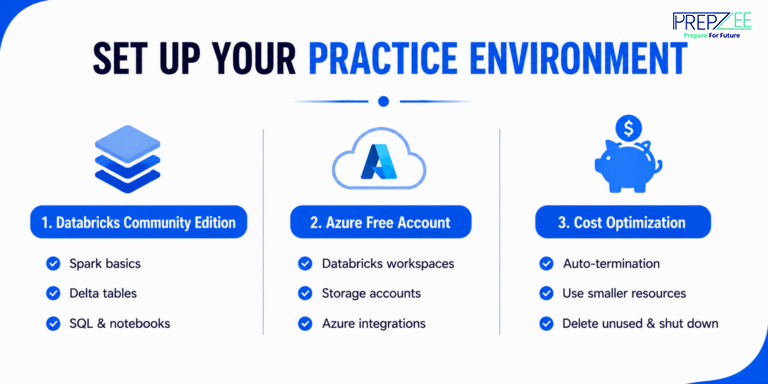
Databricks Community Edition
Community Edition is useful for learning:
- Spark basics
- Delta tables
- SQL transformations
- Notebook workflows
Azure Free Account
You can explore:
- Azure Databricks workspaces
- Storage accounts
- Monitoring tools
- Azure integrations
Azure Databricks integrates with cloud storage, identity management, and other Azure services to support data engineering workloads. The Azure data engineer roadmap explains how these technologies fit into a broader cloud data engineering learning path.
Cost Optimization Tips
- Enable auto-termination.
- Use smaller compute resources.
- Delete unused resources.
- Shut down environments after practice.
Common Mistakes Candidates Make
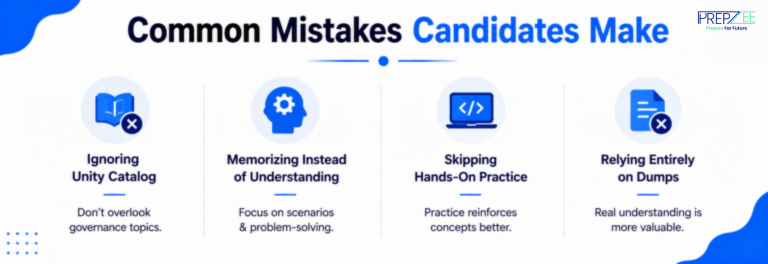
Ignoring Unity Catalog
Many candidates spend too much time on PySpark while overlooking governance topics.
Memorizing Instead of Understanding
DP-750 focuses on scenarios and problem-solving rather than syntax memorization.
Skipping Hands-On Practice
Practical experience reinforces concepts better than theory alone.
Relying Entirely on Dumps
Understanding real-world concepts is more valuable than memorizing answers.
Exam-Day Tips
- Read every question carefully.
- Eliminate incorrect options.
- Flag difficult questions.
- Manage your time effectively.
- Avoid spending too much time on one question.
Final Thoughts
The DP-750 Azure Databricks Data Engineer Associate certification validates practical skills used in modern data engineering environments. With a structured study plan, hands-on practice, and consistent revision, candidates can prepare confidently while building skills that extend far beyond the certification itself.
At Prepzee, we believe that combining official learning resources with practical experience is one of the most effective ways to prepare for modern cloud and data engineering certifications.
Hands-on experience with Databricks, PySpark, Delta Lake, and data pipeline development helps reinforce the technical skills covered in DP-750. Prepzee’s Data Engineer Job-Oriented Program includes practical training in these technologies, covering distributed processing, data transformation, and cloud data engineering.
Frequently Asked Questions
FAQ
DP-750 focuses specifically on Databricks and lakehouse architectures. Candidates with Databricks experience may find it easier.
Basic SQL and Python knowledge is recommended, although the exam emphasizes concepts and scenarios.
Most candidates require four to eight weeks, depending on their experience level.
Yes. Community Edition is sufficient for learning many concepts and practicing notebooks.
As Databricks adoption continues to increase, expertise in Delta Lake, Unity Catalog, and pipeline orchestration is becoming increasingly valuable.
Siddharth Sharma