


Is Microsoft AI-103 Certification Worth It in 2026? Jobs, Salary, ROI & Career Outlook

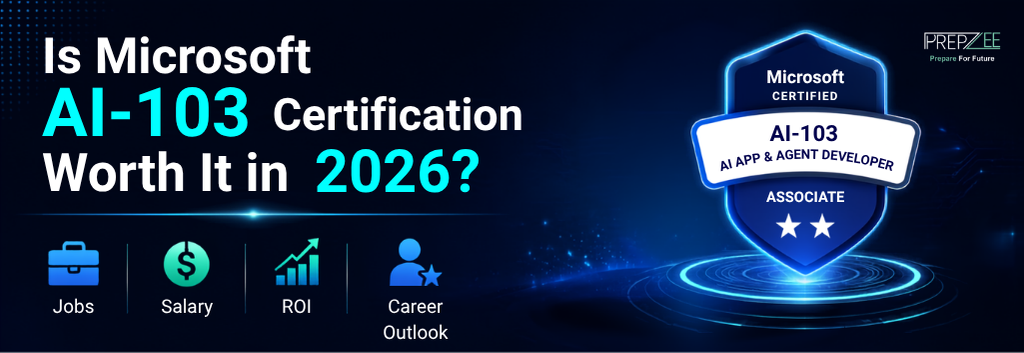
Table of content
- What Is Microsoft AI-103 Certification?
- Why AI-103 Matters More Than Previous Azure AI Certifications
- AI Job Demand Continues to Grow
- AI-103 Aligns with Modern Enterprise Skills
- Does AI-103 Improve Your Salary Potential?
- Is AI-103 Worth It for Beginners?
- Cost vs ROI: Is the Investment Worth It?
- AI-103 vs Other Microsoft AI Certifications
- Who Should Pursue AI-103?
- Who Might Not Need AI-103?
- Final Verdict: Is Microsoft AI-103 Certification Worth It in 2026?
- FAQ
Artificial Intelligence has moved far beyond chatbots and experimental projects. Today, businesses are investing heavily in AI-powered applications, autonomous agents, Retrieval-Augmented Generation (RAG), and enterprise copilots to improve productivity and customer experiences. As Microsoft’s AI ecosystem evolves, so do its certifications.
The Microsoft Certified: Azure AI Apps and Agents Developer Associate (AI-103) certification is Microsoft’s latest credential for developers building modern AI applications using Microsoft Foundry, Azure AI Services, Python, and Generative AI. Unlike its predecessor, AI-102, AI-103 focuses on practical AI application development rather than simply integrating Cognitive Services.
But with the certification being relatively new, many candidates are asking the same question:
Is Microsoft AI-103 Certification worth pursuing in 2026?
The answer is yes, but only if your career goals align with modern AI development. In this guide, we’ll explore the job market, salary potential, industry demand, career benefits, and return on investment (ROI) to help you decide whether AI-103 deserves a place on your learning roadmap.
What Is Microsoft AI-103 Certification?
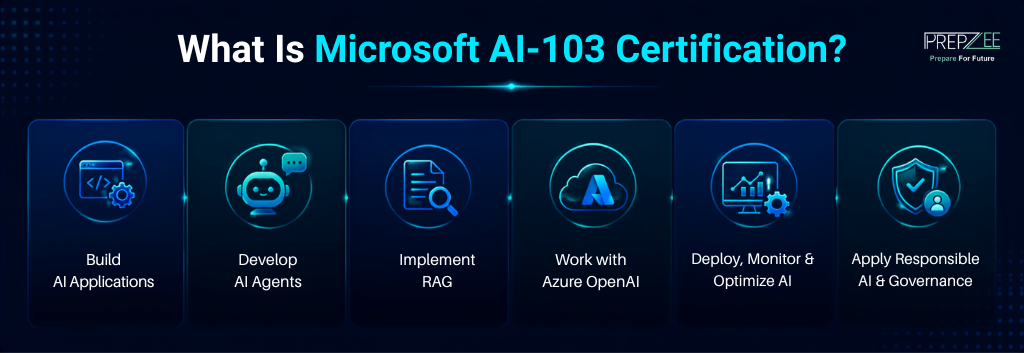
AI-103 is Microsoft’s new associate-level certification designed for professionals who build, deploy, and manage AI-powered applications on Azure. It replaces the retiring AI-102 certification and reflects Microsoft’s shift toward Generative AI, AI Agents, Microsoft Foundry, and intelligent enterprise applications.
Rather than focusing on standalone AI APIs, AI-103 validates your ability to:
- Build AI-powered applications using Microsoft Foundry.
- Develop AI agents and multi-agent workflows.
- Implement Retrieval-Augmented Generation (RAG).
- Work with Azure OpenAI models.
- Deploy, monitor, and optimize AI solutions.
- Apply Responsible AI and governance practices.
Microsoft also expects candidates to have experience with Python, making AI-103 more developer-oriented than previous Azure AI certifications.
If you’re unfamiliar with the certification structure, syllabus, or exam format, you can also explore Prepzee’s AI-103 Certification Guide, which provides a complete breakdown of the exam objectives, learning modules, and preparation roadmap.
Why AI-103 Matters More Than Previous Azure AI Certifications
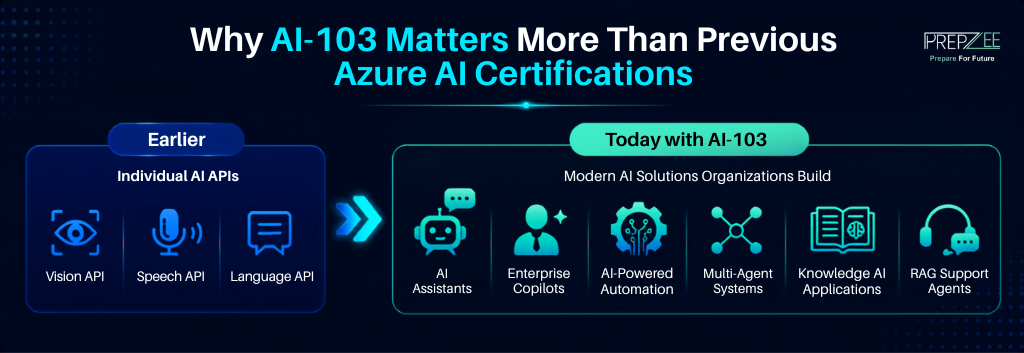
One of the biggest reasons AI-103 is valuable is that it reflects how AI is actually being built today.
A few years ago, developers mainly integrated individual Azure Cognitive Services such as Vision, Speech, or Language APIs into their applications.
Today’s AI solutions look very different.
Organizations are building:
- AI assistants.
- Enterprise copilots.
- AI-powered automation.
- Multi-agent systems.
- Knowledge-based AI applications.
- Customer support agents using RAG.
Microsoft redesigned its Azure AI certification to better reflect modern AI development practices. To understand how the new exam differs from the retiring AI-102 certification, explore our AI-102 vs AI-103: What’s Changed in Microsoft’s Azure AI Certification? comparison, where we explain the updated exam domains, Microsoft Foundry integration, AI agent concepts, and retirement timeline.
Instead of asking whether you know an API, AI-103 evaluates whether you can build complete AI applications capable of reasoning, retrieving information, and interacting with users intelligently.
That makes the certification far more relevant to employers hiring AI developers in 2026.
AI Job Demand Continues to Grow
One of the strongest arguments for pursuing AI-103 is the current demand for AI professionals.
Here’s why demand remains strong:
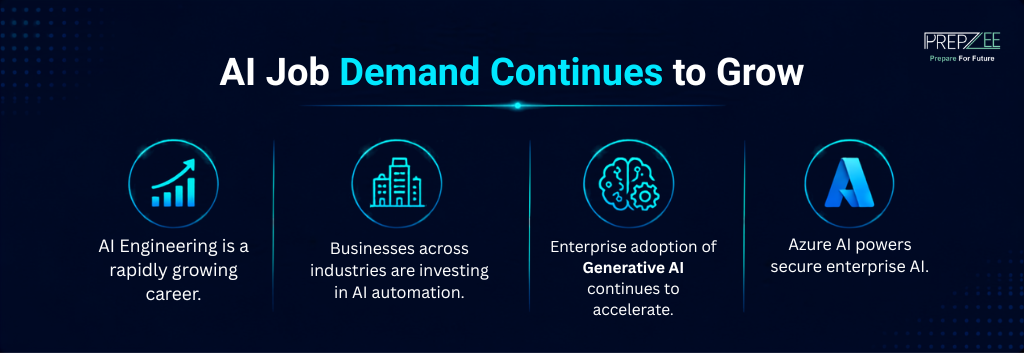
- AI engineering is among the fastest-growing technology careers.
- Businesses across finance, healthcare, retail, manufacturing, and SaaS are investing in AI-powered automation.
- Enterprise adoption of Generative AI continues to accelerate.
- Azure AI is widely used by organizations building secure, enterprise-grade AI solutions.
More importantly, companies aren’t simply looking for professionals who understand AI concepts—they need developers who can build production-ready AI systems using cloud platforms like Microsoft Azure.
That’s exactly where AI-103 positions you.
AI-103 Aligns with Modern Enterprise Skills
Unlike many older certifications, AI-103 focuses on technologies that organizations are actively implementing.
Some of the most valuable skills you’ll gain include:
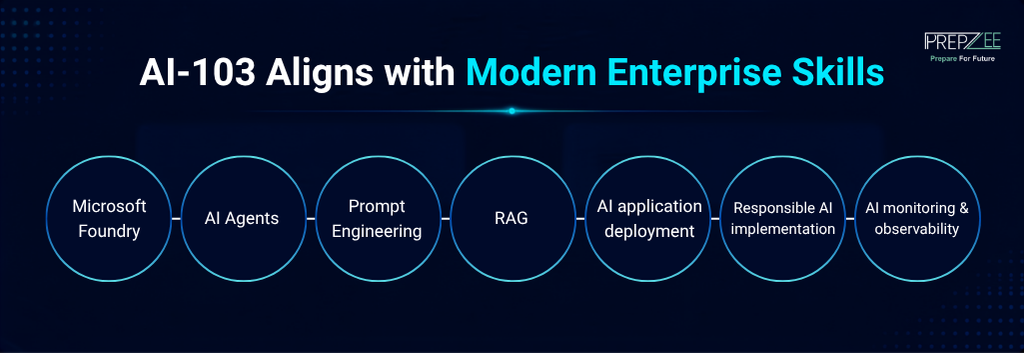
- Microsoft Foundry.
- AI Agents.
- Prompt Engineering.
- Retrieval-Augmented Generation (RAG).
- Azure OpenAI.
- AI application deployment.
- Responsible AI implementation.
- AI monitoring and observability.
These aren’t theoretical concepts.
They’re the technologies powering enterprise AI assistants, customer service bots, internal copilots, document automation systems, and intelligent business applications across industries.
This makes AI-103 far more future-focused than certifications centered primarily on traditional AI APIs.
Does AI-103 Improve Your Salary Potential?
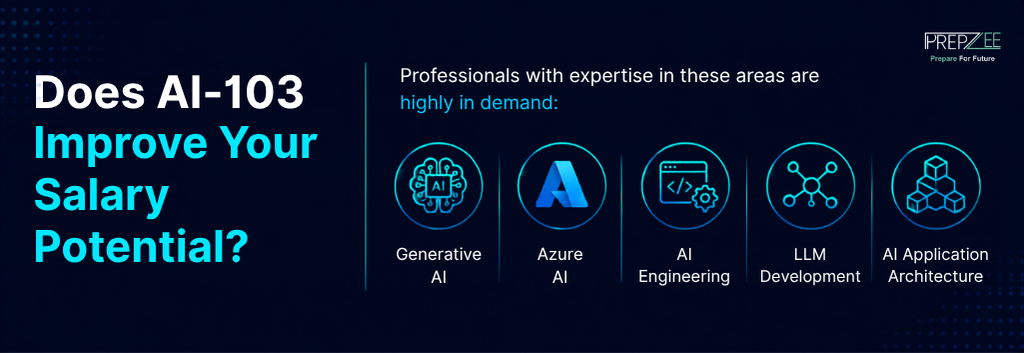
Certification alone won’t guarantee a higher salary, but it can strengthen your profile by validating in-demand skills.
Professionals with expertise in the following AI and Azure technologies are among the most sought-after technology specialists in today’s job market:
- Generative AI.
- Azure AI.
- AI Engineering.
- LLM development.
- AI application architecture.
For recruiters, an AI-103 certification demonstrates that you understand Microsoft’s latest AI ecosystem rather than legacy Azure AI services. That distinction can be valuable when applying for roles involving enterprise AI development, especially as organizations increasingly adopt Microsoft Foundry and AI agents.
Is AI-103 Worth It for Beginners?
Yes, but with one important condition.
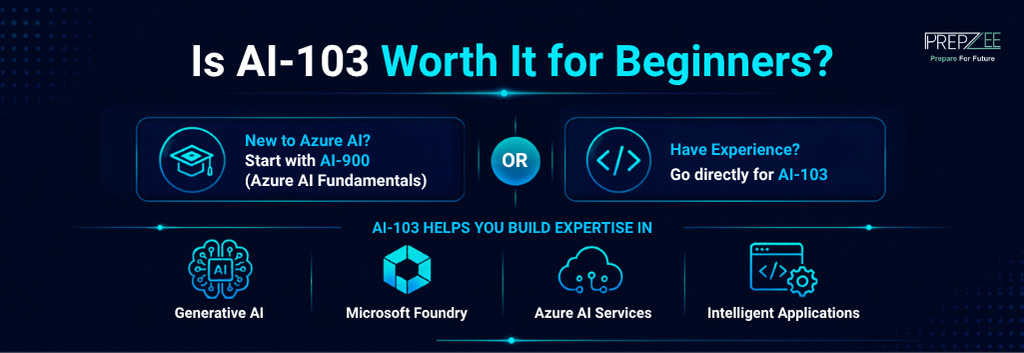
AI-103 is an associate-level certification, meaning it’s designed for developers and IT professionals who already have a basic understanding of Azure, programming, and AI concepts. Unlike AI-900, which introduces AI fundamentals, AI-103 expects candidates to build and deploy real-world AI applications using Python, Microsoft Foundry, and Azure AI services.
If you’re completely new to Azure AI, consider starting with AI-900 (Azure AI Fundamentals) to build a strong foundation before moving on to AI-103. On the other hand, if you already have experience with Python, cloud computing, or machine learning, you can begin preparing directly for AI-103.
The growing demand for Azure AI professionals makes AI-103 a strong certification for developers looking to build expertise in Generative AI, Microsoft Foundry, and intelligent applications. However, before investing your time and money, it’s important to evaluate whether the certification delivers a worthwhile return.
To help you prepare with confidence, Prepzee offers Microsoft certification guides, Azure AI learning resources, exam strategies, and practice-focused content designed to support every stage of your certification journey.
Cost vs ROI: Is the Investment Worth It?
Whenever professionals consider a certification, they usually evaluate three things:
- Cost.
- Time investment.
- Career return.
The AI-103 exam costs approximately $165 USD, and most candidates spend 6–8 weeks preparing, depending on their experience level.
At first glance, that may seem like a significant investment. However, compared to the long-term career opportunities in AI development, the return can be substantial.
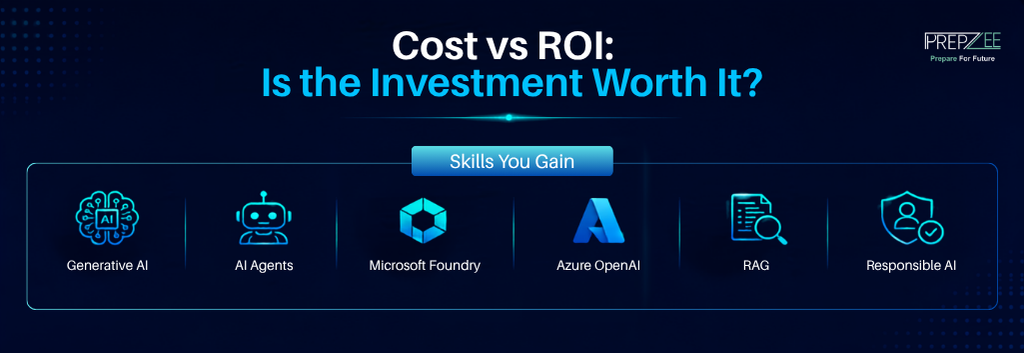
Unlike certifications that focus on older technologies, AI-103 validates skills that organizations are actively adopting today, including:
- Generative AI.
- AI Agents.
- Microsoft Foundry.
- Azure OpenAI.
- Retrieval-Augmented Generation (RAG).
- Responsible AI.
These are the same technologies powering enterprise copilots, AI assistants, document automation systems, and intelligent business applications.
If your goal is to work in Azure AI development, AI engineering, or enterprise AI solutions, AI-103 offers a strong return on investment because it aligns with Microsoft’s future AI roadmap rather than legacy Azure AI services.
AI-103 vs Other Microsoft AI Certifications
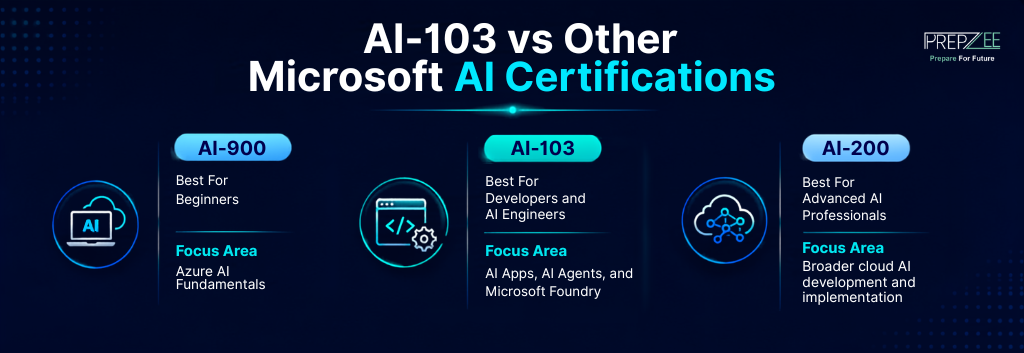
Choosing the right certification depends on your current experience and career goals.
| Certification | Best For | Focus Area |
| AI-900 | Beginners | Azure AI Fundamentals |
| AI-103 | Developers and AI Engineers | AI Apps, AI Agents, and Microsoft Foundry |
| AI-200 | Advanced AI Professionals | Broader cloud AI development and implementation |
If you’re planning a long-term Azure AI career, the recommended progression is:
AI-900 → AI-103 → Advanced Azure AI Certifications
This path helps you build foundational knowledge before moving into enterprise AI application development.
Who Should Pursue AI-103?
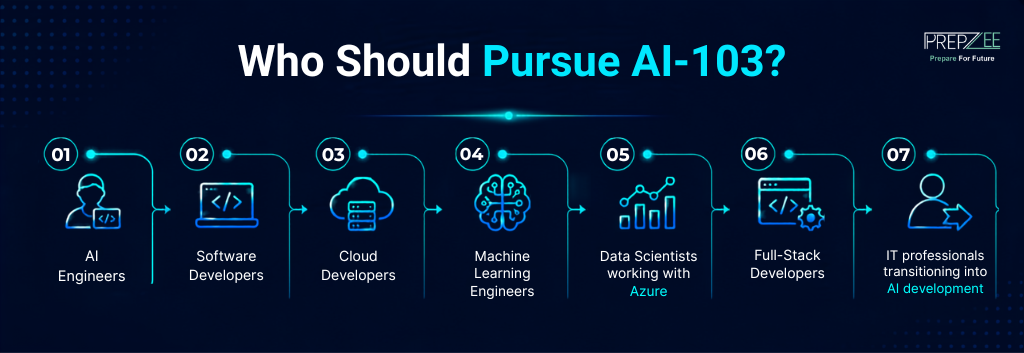
AI-103 is an excellent choice for professionals who want to build practical AI applications rather than simply understand AI concepts.
It’s particularly valuable for:
- AI Engineers.
- Software Developers.
- Cloud Developers.
- Machine Learning Engineers.
- Data Scientists working with Azure.
- Full-Stack Developers interested in Generative AI.
- IT professionals transitioning into AI development.
However, if you’re looking for an introductory AI certification with no programming requirements, AI-900 is a better starting point.
Who Might Not Need AI-103?
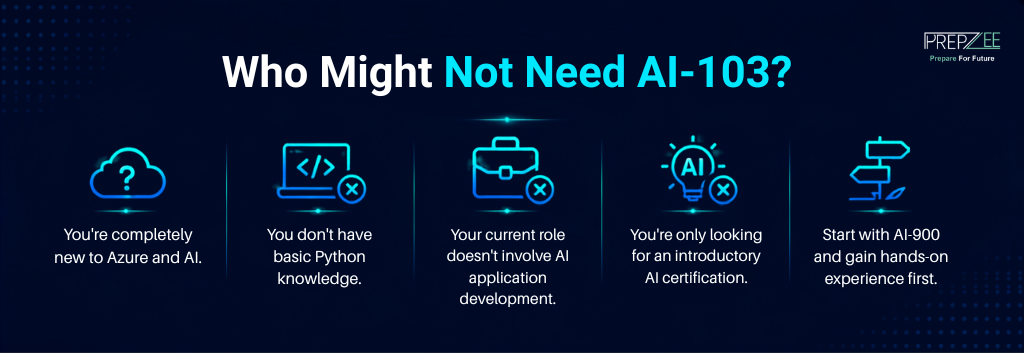
While AI-103 is highly relevant for AI developers, it may not be the best fit for everyone.
You may want to delay this certification if:
- You’re completely new to Azure and AI.
- You don’t have basic Python knowledge.
- Your current role doesn’t involve AI application development.
- You’re only looking for an introductory AI certification.
In these situations, beginning with AI-900 and gaining some hands-on experience will make AI-103 much easier to approach.
Final Verdict: Is Microsoft AI-103 Certification Worth It in 2026?
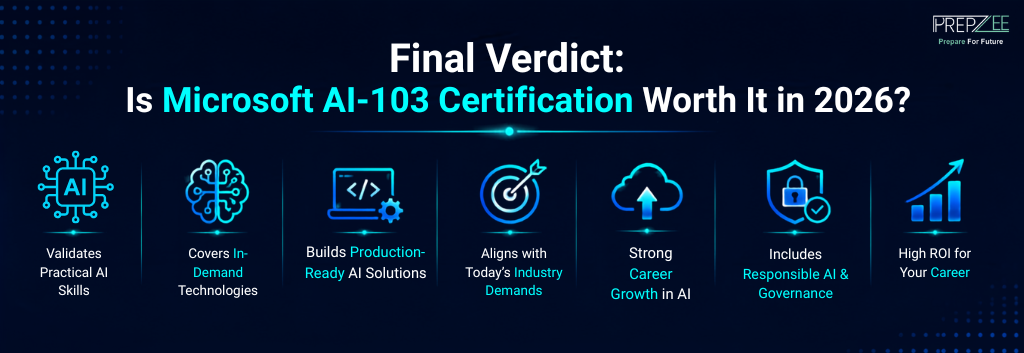
Yes, AI-103 is one of the most valuable Microsoft certifications for developers pursuing a career in enterprise AI.
Unlike legacy Azure AI certifications, AI-103 validates practical skills that align with today’s industry demands, including Generative AI, AI Agents, Microsoft Foundry, Retrieval-Augmented Generation (RAG), and Responsible AI. These technologies are rapidly becoming standard across industries, making the certification highly relevant for professionals who want to build production-ready AI solutions.
If you’re planning a career in Azure AI development, cloud AI engineering, or intelligent application development, AI-103 offers a strong return on investment by validating skills that employers actively seek. While it requires commitment and hands-on practice, the knowledge gained extends well beyond passing the exam-it prepares you for real-world AI projects.
Frequently Asked Questions
FAQ
Yes. AI-103 replaces AI-102 and focuses on modern AI development using Microsoft Foundry, AI agents, Retrieval-Augmented Generation (RAG), and Generative AI. It better reflects the skills organizations need in 2026.
Yes. Microsoft recommends that candidates have experience with Python, Azure AI services, and AI application development before attempting the certification.
AI-103 can strengthen your profile for roles such as:
- Azure AI Developer
- AI Engineer
- Generative AI Developer
- AI Solutions Engineer
- Cloud AI Engineer
- Intelligent Automation Developer
While the certification itself doesn’t guarantee employment, it validates practical skills that employers increasingly seek in enterprise AI projects.
The best approach is to combine theory with hands-on practice. Focus on Microsoft Foundry, Azure OpenAI, AI Agents, Prompt Engineering, and RAG while building real-world projects.
For a complete preparation roadmap, exam syllabus, learning modules, and study strategy, read Prepzee’s AI-103 Certification Guide
Siddharth Sharma