

 Blog Can AI-103 Certification Help You Get an AI Engineer Job? Skills, Salary & Career Guide (2026)
 Can AI-103 Certification Help You Get an AI Engineer Job? Skills, Salary & Career Guide (2026)

Table of content
- What Is Microsoft AI-103 Certification?
- What Does an AI Engineer Actually Do?
- AI Engineer Job Demand Continues to Grow
- How AI-103 Skills Match AI Engineer Requirements
- Where AI-103 Gives You an Advantage
- Can AI-103 Certification Alone Get You an AI Engineer Job?
- Skills AI-103 Doesn't Teach
- Build a Portfolio That Employers Notice
- AI Engineer Salary Expectations
- Career Roadmap After AI-103
- Final Verdict: Can AI-103 Certification Help You Get an AI Engineer Job?
- Continue Your Azure AI Career Journey
- FAQ
Artificial Intelligence has become one of the fastest-growing fields in technology, creating opportunities for professionals with expertise in cloud computing, Generative AI, Large Language Models (LLMs), and intelligent application development. As organizations continue adopting Microsoft Azure AI, the demand for professionals who can design, build, and deploy AI-powered applications continues to rise.
This growing demand has also increased interest in Microsoft’s latest certification, the AI-103: Azure AI Apps and Agents Developer Associate.
But one question appears repeatedly among aspiring AI professionals:
Can AI-103 Certification actually help you get an AI Engineer job?
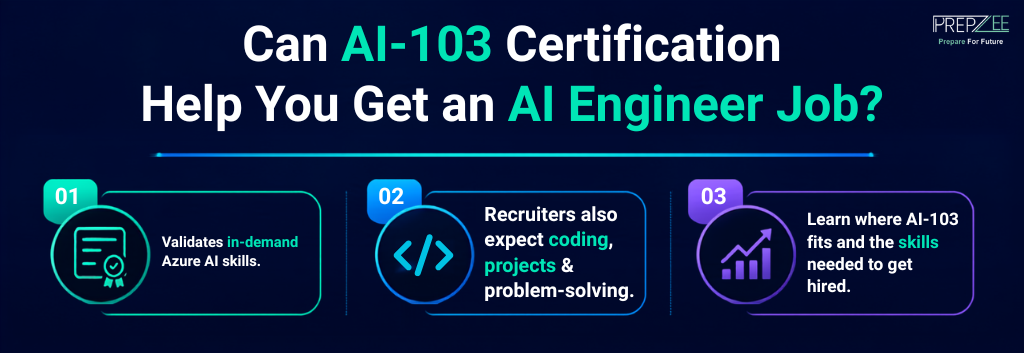
The answer is yes, but it isn’t a guaranteed ticket to employment.
AI-103 validates many of the technical skills employers look for when hiring Azure AI developers and AI Engineers. However, recruiters also evaluate your practical experience, programming skills, project portfolio, and ability to solve real business problems.
In this guide, we’ll explain how AI-103 aligns with AI Engineer job requirements, where it adds value, and what additional skills you should develop to improve your chances of getting hired.
What Is Microsoft AI-103 Certification?
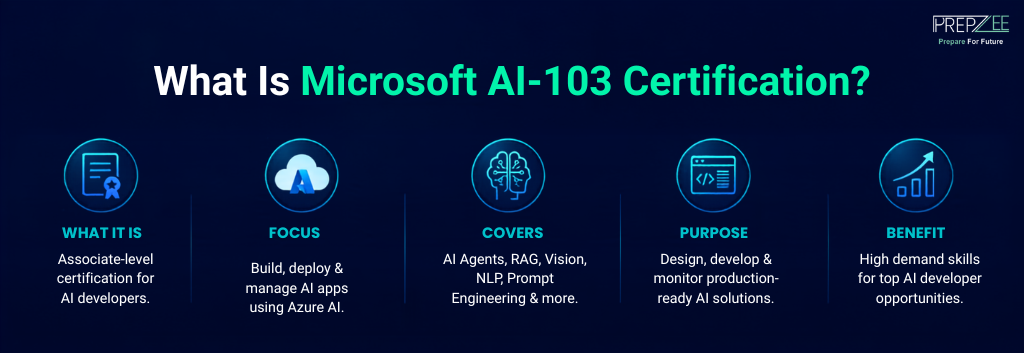
Microsoft AI-103, officially known as the Azure AI Apps and Agents Developer Associate, is an associate-level certification designed for developers who build intelligent applications using Azure AI.
Unlike the retired AI-102 certification, AI-103 focuses on modern AI development with technologies such as:
- Microsoft Foundry.
- Azure OpenAI.
- AI Agents.
- Prompt Engineering.
- Retrieval-Augmented Generation (RAG).
- Computer Vision.
- Text Analysis.
- Information Extraction.
- Responsible AI.
Rather than testing individual Azure AI services, Microsoft evaluates your ability to design, deploy, monitor, and manage production-ready AI applications.
If you’re new to the certification, you can also explore our AI-103 Certification: Azure AI App & Agent Developer Certification in 2026 – A Quick Guide to understand the exam structure, syllabus, and preparation strategy.
What Does an AI Engineer Actually Do?
Many beginners assume AI Engineers spend their time building machine learning models from scratch.
In reality, modern AI Engineers often focus on integrating AI into business applications using cloud platforms like Microsoft Azure.
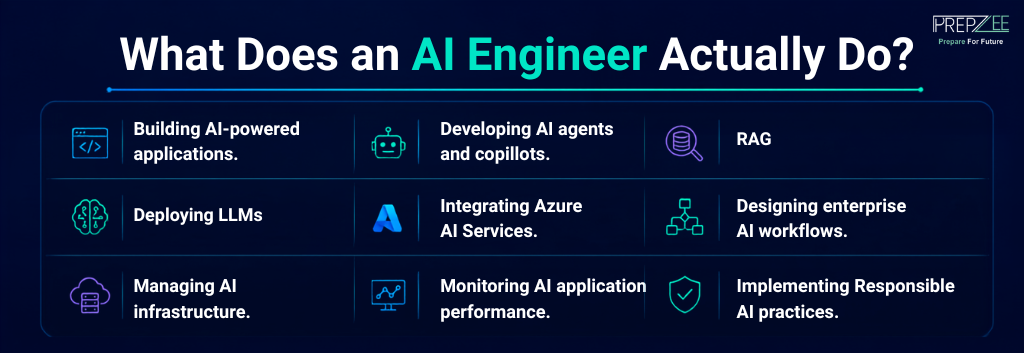
Typical responsibilities include:
- Building AI-powered applications.
- Developing AI agents and copilots.
- Implementing Retrieval-Augmented Generation (RAG).
- Deploying Large Language Models (LLMs).
- Integrating Azure AI Services.
- Designing enterprise AI workflows.
- Managing AI infrastructure.
- Monitoring AI application performance.
- Implementing Responsible AI practices.
These responsibilities closely match the practical skills covered in Microsoft’s AI-103 certification, making it highly relevant for professionals pursuing Azure AI roles.
AI Engineer Job Demand Continues to Grow
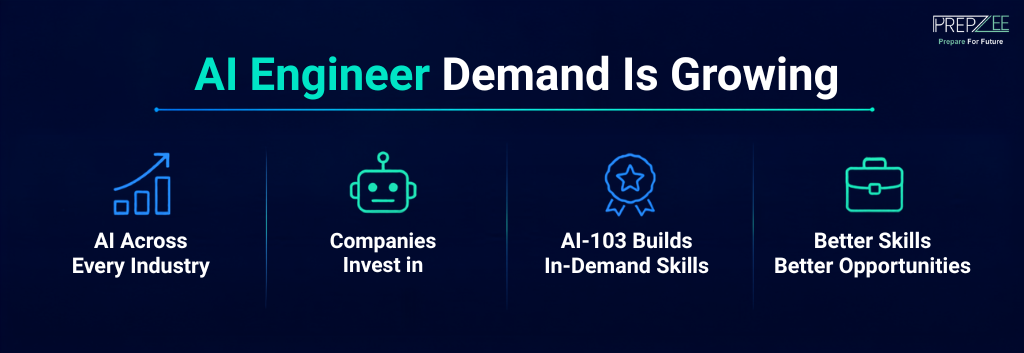
Artificial Intelligence has become a business priority across industries including healthcare, finance, retail, manufacturing, education, and SaaS.
Organizations are investing heavily in:
- Enterprise AI assistants.
- Customer support automation.
- AI copilots.
- Intelligent document processing.
- Knowledge retrieval systems.
- Workflow automation.
- AI-powered search applications.
As Azure AI adoption grows, companies increasingly seek professionals who understand Microsoft’s AI ecosystem rather than only traditional machine learning concepts.
This shift has made Azure AI certifications like AI-103 increasingly valuable for developers looking to specialize in enterprise AI development. The skills covered in AI-103 including Azure AI, Generative AI, Retrieval-Augmented Generation (RAG), Computer Vision, Natural Language Processing, and Responsible AI closely align with the technical capabilities many employers look for in AI Engineer roles.
If you’re planning to build a career in Azure AI, Prepzee provides Microsoft certification guides, Azure AI learning resources, preparation roadmaps, and exam-focused content to help you develop practical skills that align with today’s AI Engineer roles.
How AI-103 Skills Match AI Engineer Requirements
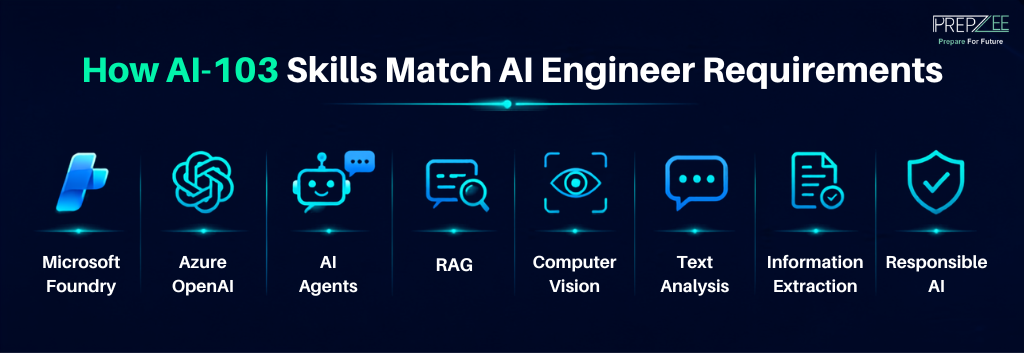
One of AI-103’s biggest strengths is that its exam objectives closely reflect the skills many employers expect from Azure AI professionals.
Here’s how the certification maps to real-world AI Engineer responsibilities.
| AI-103 Skill Area | How It Helps in an AI Engineer Role |
| Microsoft Foundry | Build, deploy, and manage enterprise AI applications |
| Azure OpenAI | Develop Generative AI solutions using LLMs |
| AI Agents | Create intelligent assistants and automated workflows |
| Retrieval-Augmented Generation (RAG) | Build AI systems that retrieve enterprise knowledge before generating responses |
| Computer Vision | Develop applications for image analysis and multimodal AI |
| Text Analysis | Process customer feedback, language understanding, and NLP tasks |
| Information Extraction | Build document intelligence and knowledge retrieval systems |
| Responsible AI | Ensure secure, ethical, and compliant AI implementations |
This alignment is one of the reasons AI-103 is relevant to AI Engineer roles. The certification emphasizes practical implementation rather than isolated AI services, which mirrors how organizations are developing AI-powered applications today.
Where AI-103 Gives You an Advantage
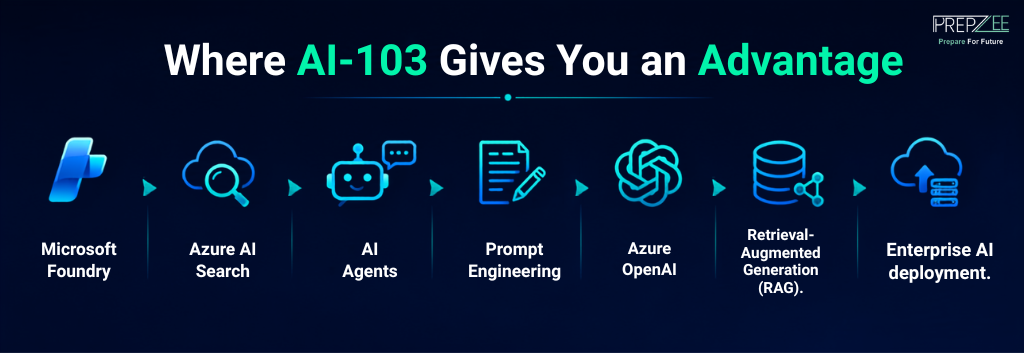
Recruiters often look for candidates who can demonstrate practical Azure AI skills.
By preparing for AI-103, you’ll gain experience with technologies that employers increasingly use in production environments, including:
- Microsoft Foundry.
- Azure AI Search.
- AI Agents.
- Prompt Engineering.
- Azure OpenAI.
- Retrieval-Augmented Generation (RAG).
- Enterprise AI deployment.
Having these skills on your resume can help demonstrate that you’re familiar with Microsoft’s latest AI ecosystem and understand how to build modern AI applications, not just theoretical machine learning models.
Can AI-103 Certification Alone Get You an AI Engineer Job?
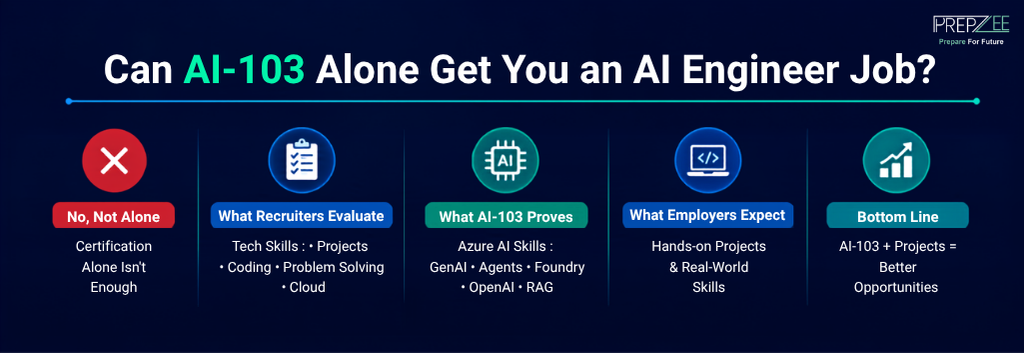
This is one of the most common questions among certification candidates.
The honest answer is no, but it can significantly improve your chances when combined with practical experience.
Recruiters rarely hire candidates based solely on a certification. Instead, they evaluate a combination of technical knowledge, hands-on projects, programming skills, problem-solving ability, and familiarity with cloud platforms.
AI-103 demonstrates that you understand Microsoft’s modern AI ecosystem, including Generative AI, AI agents, Microsoft Foundry, Azure OpenAI, and Retrieval-Augmented Generation (RAG). However, employers also expect candidates to apply these skills in real-world scenarios.
Think of AI-103 as a strong validation of your Azure AI expertise rather than a replacement for practical experience. The certification can help you stand out during the screening process, but showcasing projects and hands-on development work is equally important.
Skills AI-103 Doesn’t Teach
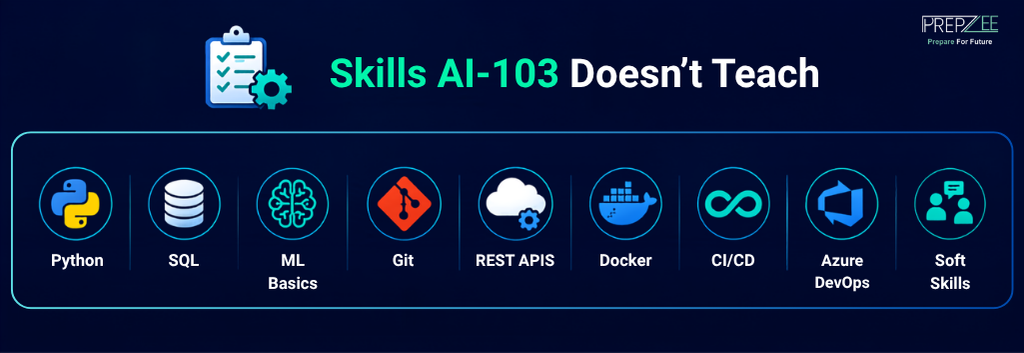
Although AI-103 covers many technologies used in enterprise AI development, it doesn’t cover every skill required for an AI Engineer role.
To become a well-rounded AI professional, you should also develop:
- Strong Python programming skills.
- Data structures and algorithms.
- SQL and database management.
- Machine Learning fundamentals.
- Git and version control.
- REST APIs.
- Docker and containerization.
- CI/CD concepts.
- Azure DevOps basics.
- Communication and collaboration skills.
These complementary skills help you contribute to production AI projects beyond implementing Azure AI services.
Build a Portfolio That Employers Notice
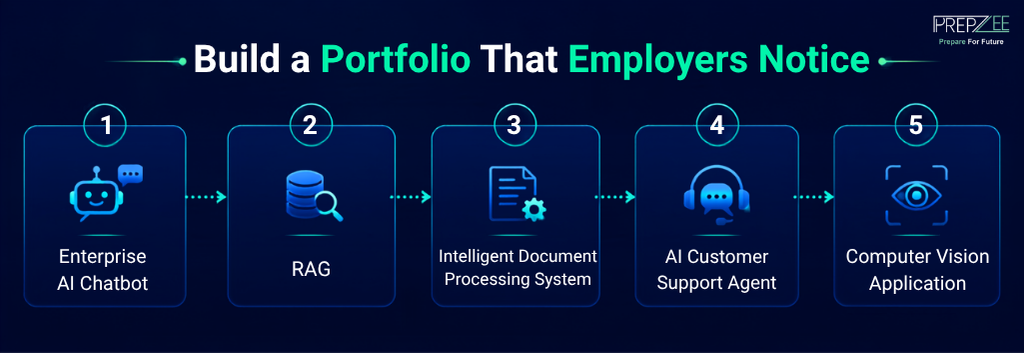
One of the best ways to strengthen your AI Engineer profile is by building practical projects.
A portfolio demonstrates that you can apply AI-103 concepts to solve real business problems.
Some excellent projects include:
1. Enterprise AI Chatbot
Build an intelligent chatbot using:
- Azure OpenAI.
- Microsoft Foundry.
- Azure AI Search.
- Prompt Engineering.
2. Retrieval-Augmented Generation (RAG) Assistant
Create an application that answers questions using company documents.
Include:
- Azure AI Search.
- Vector Search.
- Document indexing.
- Prompt grounding.
3. Intelligent Document Processing System
Develop a solution that extracts information from:
- PDFs.
- Invoices.
- Forms.
Use Azure AI Document Intelligence to process and extract structured information from these documents.
4. AI Customer Support Agent
Create an AI agent capable of:
- Answering customer questions.
- Retrieving enterprise knowledge.
- Calling external APIs.
- Escalating support requests when required.
5. Computer Vision Application
Develop an application that performs:
- Image analysis.
- OCR.
- Image captioning.
- Object detection.
Projects like these not only reinforce AI-103 concepts but also provide tangible evidence of your skills during interviews.
AI Engineer Salary Expectations
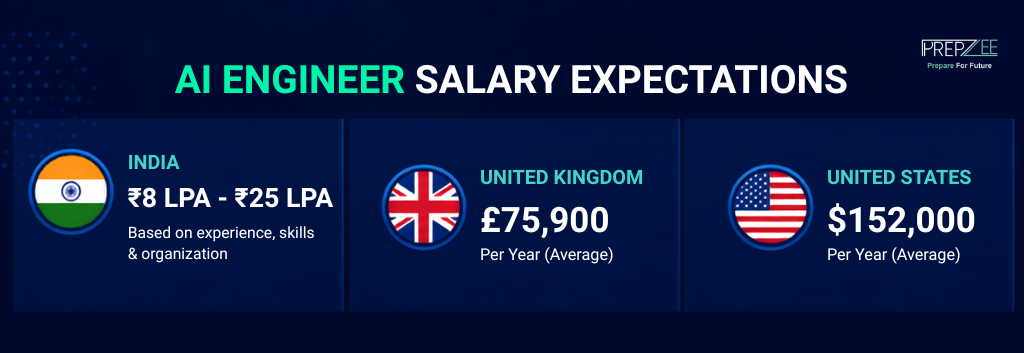
AI Engineering continues to be one of the highest-paying technology career paths.
While salaries vary based on experience, location, and company, professionals with expertise in Azure AI, Generative AI, and cloud-based AI development are in high demand. In India, AI Engineers typically earn between ₹8 LPA and ₹25 LPA, depending on their experience, technical skills, and the organization they work for. In international markets, average salaries can reach around £75,900 per year in the United Kingdom and approximately $152,000 annually in the United States.
As organizations continue investing in AI-powered solutions, skilled AI Engineers can expect strong earning potential and long-term career growth.
As you gain hands-on experience and complete real-world AI projects, your earning potential generally increases beyond what a certification alone can provide.
Career Roadmap After AI-103
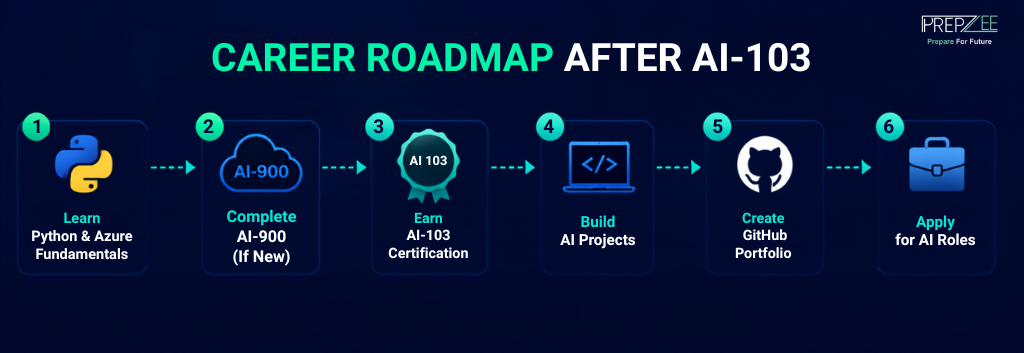
Earning AI-103 is an important milestone, but your learning journey shouldn’t stop there.
A practical progression could look like this:
Step 1: Learn Python and Azure Fundamentals
Step 2: Complete AI-900 if You’re New to Azure AI
Step 3: Earn AI-103 Certification
Step 4: Build Production-Ready AI Applications
Step 5: Create a Strong GitHub Portfolio
Step 6: Apply for Relevant AI Roles
Potential roles include:
-
- Azure AI Developer.
- AI Engineer.
- Generative AI Engineer.
- Cloud AI Engineer.
- Intelligent Applications Developer
Step 7: Continue Learning Advanced Azure AI and MLOps Topics
Continue expanding your knowledge of advanced Azure AI, model monitoring, deployment automation, governance, and MLOps practices as your career grows.
Final Verdict: Can AI-103 Certification Help You Get an AI Engineer Job?
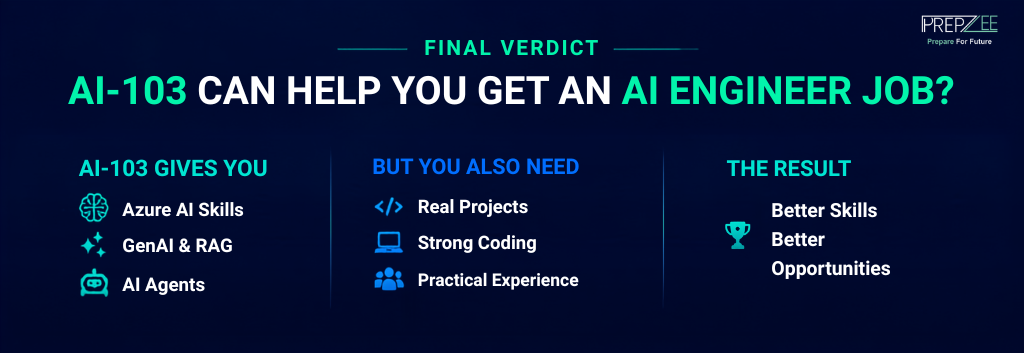
Yes, but it’s most effective when paired with practical experience and a strong project portfolio.
AI-103 equips you with many of the technical skills employers seek in Azure AI professionals, including Generative AI, Microsoft Foundry, AI agents, Retrieval-Augmented Generation (RAG), Computer Vision, and Responsible AI. These skills closely align with modern AI Engineer responsibilities, making the certification a valuable credential for developers looking to enter or advance in the Azure AI ecosystem.
However, certification alone isn’t enough. Employers also want candidates who can solve real-world problems, write clean code, collaborate with teams, and build production-ready AI applications. By combining AI-103 with hands-on projects, continuous learning, and practical Azure experience, you’ll be in a much stronger position to pursue AI Engineer opportunities.
Continue Your Azure AI Career Journey
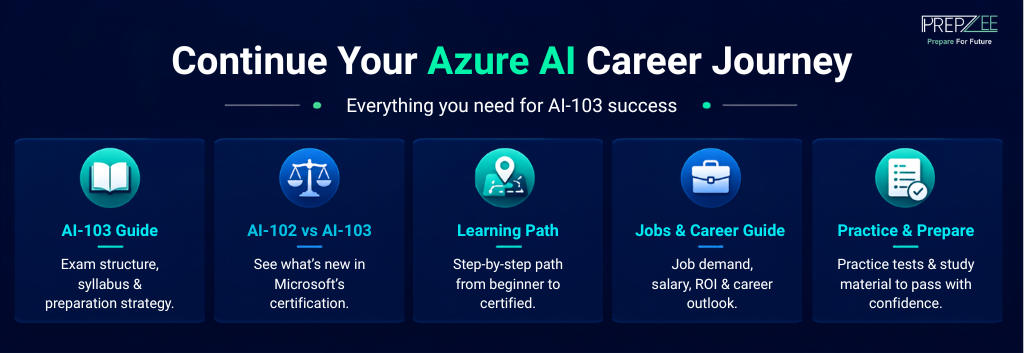
If you’re preparing for AI-103, explore our AI-103 Certification: Azure AI App & Agent Developer Certification in 2026 – A Quick Guide to understand the exam structure, syllabus, and preparation strategy.
To see how Microsoft’s latest certification compares with its predecessor, read AI-102 vs AI-103: What’s Changed in Microsoft’s Azure AI Certification?
If you’re still evaluating whether AI-103 aligns with your career goals, check out Is Microsoft AI-103 Certification Worth It in 2026? Jobs, Salary, ROI & Career Outlook for a detailed look at job demand, earning potential, and return on investment.
You can also follow our Microsoft AI-103 Learning Path: A Step-by-Step Guide from Beginner to Certified to build the skills needed for the certification in a structured way.
Finally, visit Prepzee for Microsoft certification guides, Azure AI learning resources, practice tests, and exam-focused study material designed to help you prepare confidently and build job-ready AI skills.
Frequently Asked Questions
FAQ
No. AI-103 validates valuable Azure AI skills, but employers also look for practical experience, programming ability, and a portfolio of real-world projects. The certification strengthens your profile but works best alongside hands-on development experience.
AI-103 is an associate-level certification intended for candidates with a basic understanding of Azure, Python, and AI concepts. If you’re completely new to Azure AI, starting with AI-900 can help build a stronger foundation before progressing to AI-103.
AI-103 can help prepare you for roles such as:
- AI Engineer
- Azure AI Developer
- Cloud AI Engineer
- Generative AI Developer
- Intelligent Applications Developer
Your eligibility will also depend on your programming skills, project experience, and overall technical background.
After completing AI-103, continue building expertise in:
- Advanced Azure AI services
- Machine Learning
- MLOps
- AI system architecture
- Cloud security
- Scalable AI deployment
Continuous learning will help you stay aligned with evolving AI technologies and improve your long-term career prospects.
Siddharth Sharma